Sunday, February 21, 2010

Back in the saddle

I jumped the gun a bit in my last blog entry by saying it was time to get back in the saddle for another adventure. I was willing, but my bike has had other ideas. Far from being ready to ride, she’s taken several days to get back to adventure-ready status.

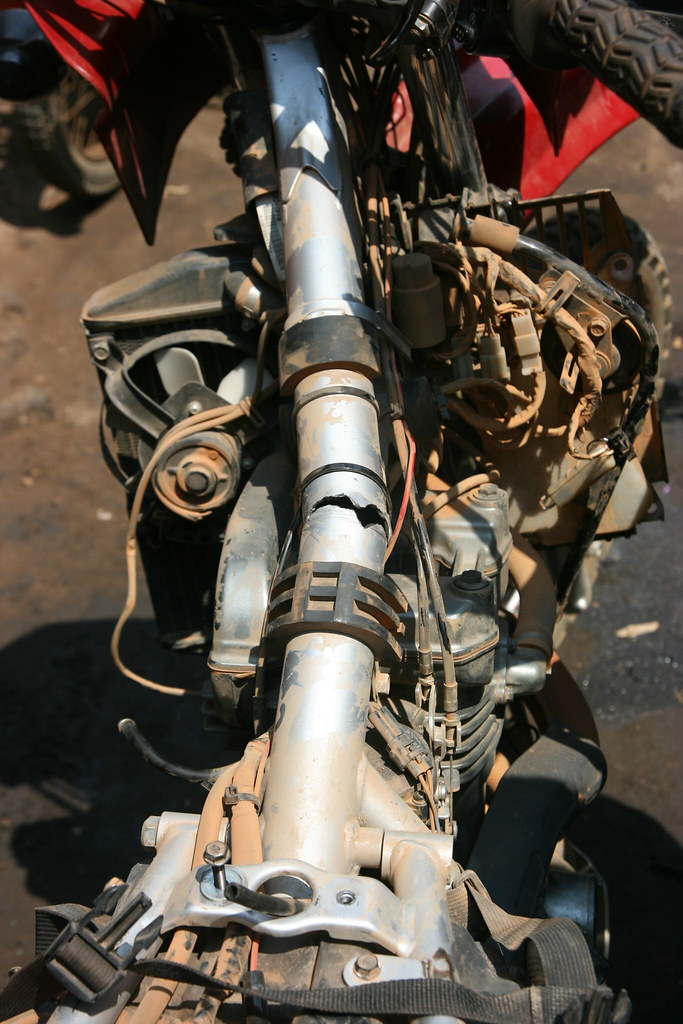
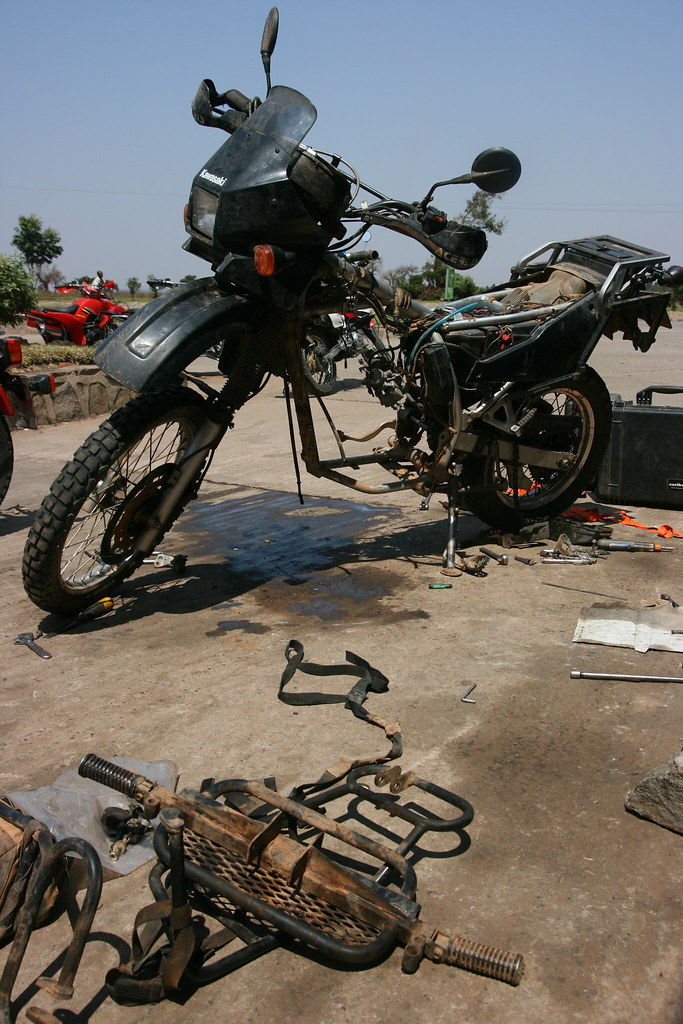
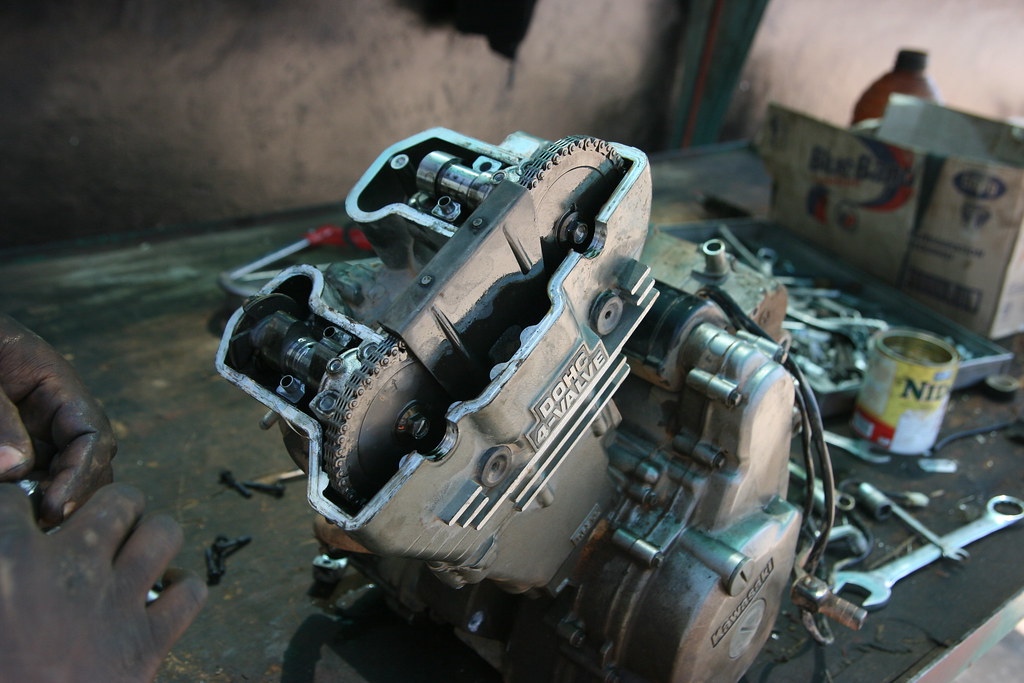
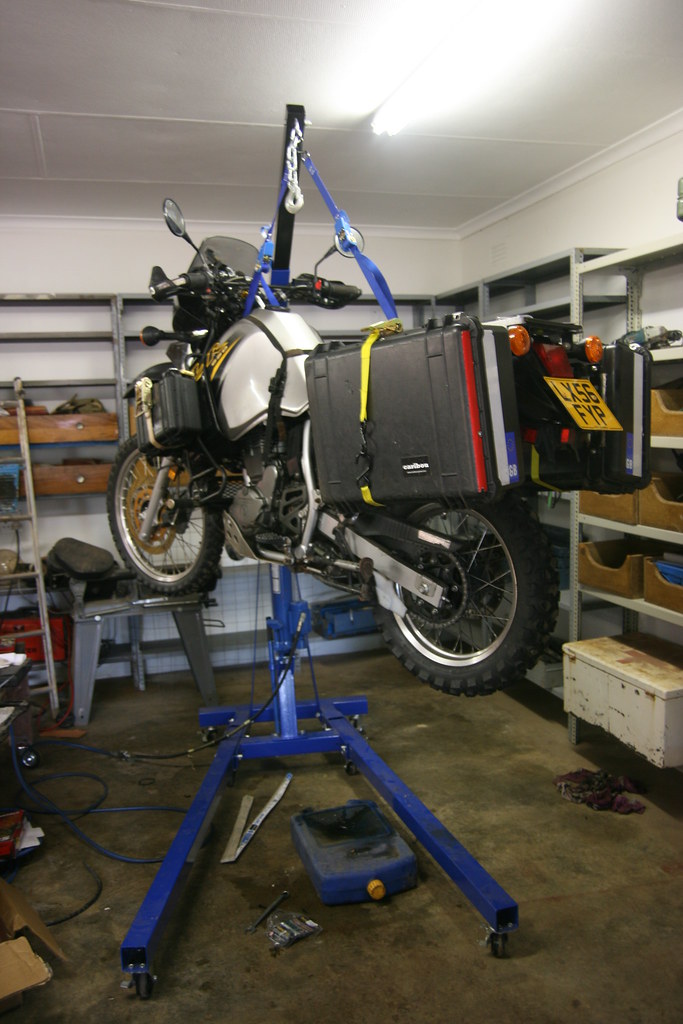
Evidently her main problem – a seized engine - has been fixed. But a whole host of other minor problems ranging from a sticking choke cable, leaking coolant and a stripped oil drain plug (that last one was my fault), kept me in Johannesburg for five days. But, thanks to the advice and help from Andre - the master mechanic - and his extensive range of tools (including the magnificent crane shown below) – my bike is back in order, and I’ve been on the road since Thursday.

Many of you will already know that I’ve managed to wangle another three months off work to go adventure riding again. I’m spending the first two weeks of that in Africa - finishing off the bits that I didn’t get to see on the last trip (mainly Namibia). For the remaining two and a half months I’ll be retracing Che Guevara’s route around Latin America. More on that in future blogs - for now: Africa.

One big difference from the London to Cape Town adventure (and indeed all of my previous bike trips) is this time I’m going solo. It’s an invigorating experience riding alone as you get a sense of freedom and independence quite different from group riding. But I’ll miss my teammates and so will you, as the quality of this blog will deteriorate from an amusing trip account filled with interesting characters, to an egotistical monologue. For that I apologise in advance.

The Phoenix Rises
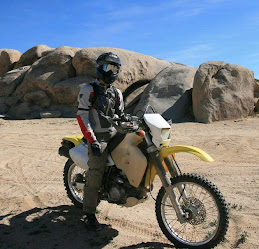
I’m slightly superstitious when it comes to my bikes, so like a good ship I always give them a name. Previously my bike was “The Odyssey” on account of the epic trips we’ve taken together. But due to the extensive repairs she’s undergone, it seems fitting to give her a new name. So, having risen out of the ashes of the Odyssey’s burnt out engine, she’s now christened “The Phoenix” - may she voyage far and wide.

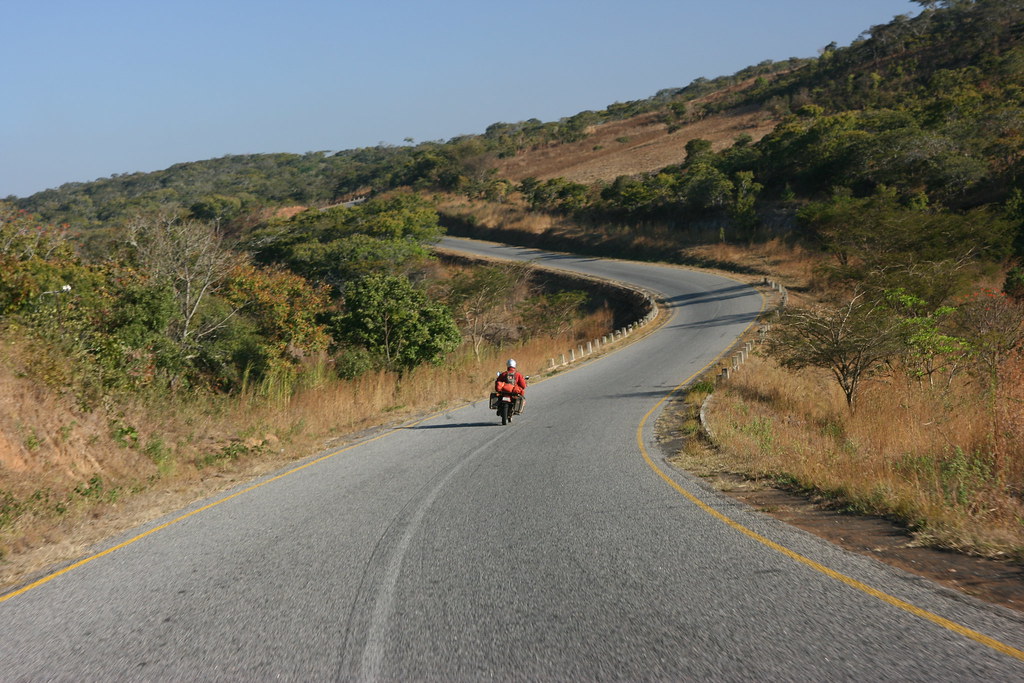
Despite her difficult birth, the Phoenix has already carried me 2200km in just four days. That’s one tenth of the distance from London to Cape Town and about twice the distance from Land’s End to John O’Groats (as the crow flies).


My first butt-numbing day was spent riding 890km on good roads from Johannesburg to Augrabies Falls, near the Namibian border. It was a nice re-introduction to the world of adventure touring, but not particularly interesting for you readers. The following day was better. It began at dawn with a visit to Augrabies Falls, which locally means “the place of big noises”. The Orange River, which flows over the falls had swelled from heavy rains earlier that week, so the falls were noisier than normal and an impressive sight (and sound) to behold.


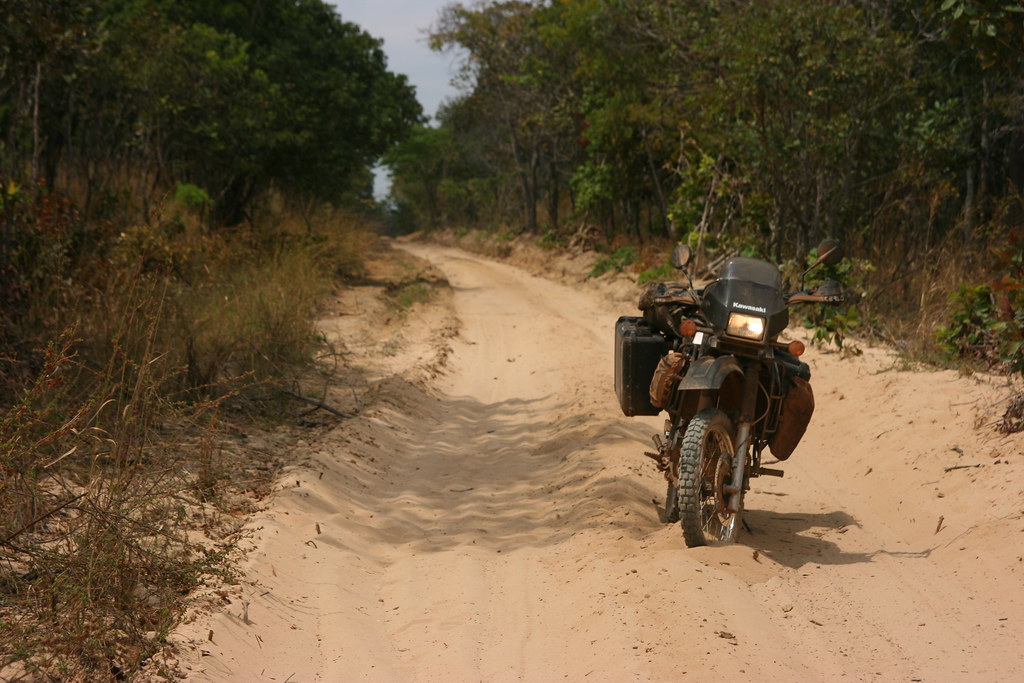
Back on the road, I soon reached the ominously named town of Pofadder, where I filled up with petrol and kept a lookout for snakes. Fully gassed up, I turned off the main highway and headed for the Namibian border. To my surprise, the smooth tar road quickly gave way to a dirt track. Glancing at my map, it soon became clear that I’d be on this stuff for well over 100 miles. And, after 18 months away from dirt biking, I don’t mind telling you I was more than a little apprehensive about off-road riding, particularly with a fully laden bike.


It took me several miles of wild fishtailing before the memories started to come back. "Stand up, keep loose, and use the throttle to get you out of trouble", I kept repeating to myself. Drenched with sweat from the stifling heat (40 degrees plus) and the high octane drama, I eventually reached the frontier. And, with the formalities quickly taken care of, I spent the rest of the day relearning my dirt-biking skills. It was a tough day, but after about 500km I was rewarded with the spectacular vista of Fish River Canyon. I arrived just before sunset, and with the place deserted I was able to ride my bike right up to the edge of the Canyon.


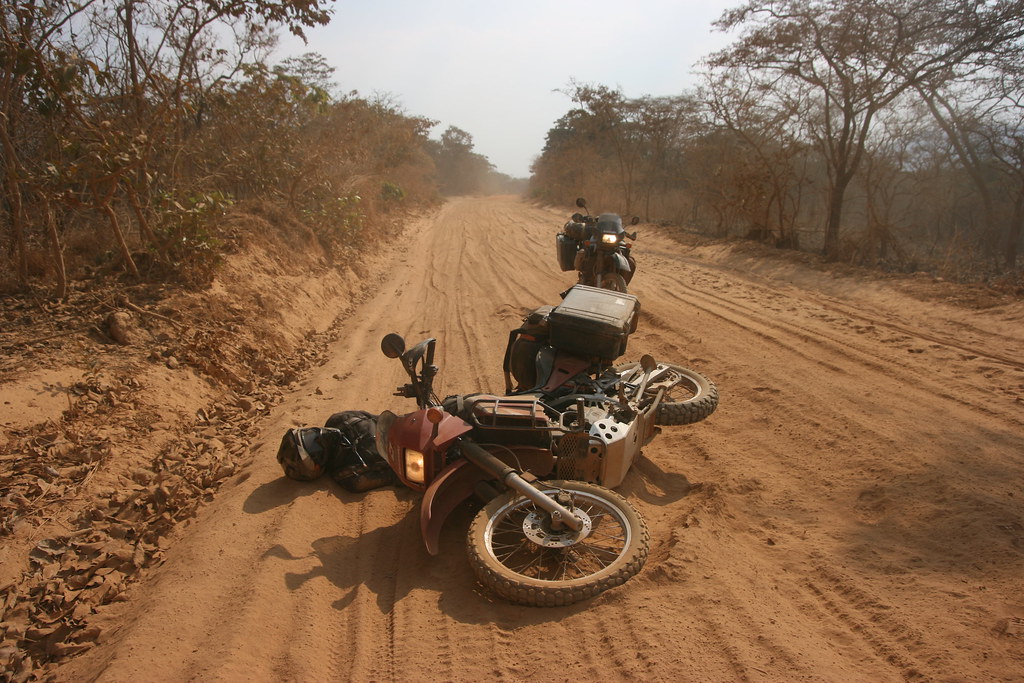
The following day proved even more eventful. With my riding confidence starting to swell, I came across a big “Road Closed” sign early in the day. Seeing no sign of immediate trouble, I belligerently ignored the warning and rode on. A few miles later I came across the obstacle that had closed the road - a dried up river bed, which consisted of 50m of deep choppy sand with no obvious route through. Bugger. With back-tracking out of the question, I had two options - either gun the throttle and attempt to bounce my way across the uneven surface, or inch my way gradually across using my feet as paddles. I opted for the more foolhardy approach, gunned the throttle and bounced about 10m before the front wheel dug in and I came to an abrupt stop in the soft sand. My top heavy bike comically toppled over to complete the maneuver. With my riding confidence restored to a more fitting level, I heaved the bike back upright and humbly paddled the rest of the way across.

200km later I was getting worried about fuel. Namibia is a sparsely populated country and the major towns on maps are often nothing more than a collection of shanties. Having ridden through one well-signposted ghosttown I made my way to Bethanie, which was clearly marked as a town with a fuel pump on my map. Just on the outskirts I switched to reserve, and was relieved to pull into a petrol station just a few minutes later. That relief was short-lived though, as I was quickly informed that the whole town was out of gas. A knowledgeable gentleman informed me that the next town definitely had some petrol, ‘just’ 85km up the road. I tried explaining that with barely two litres of fuel left in my tank that it was very unlikely I’d be able to make it. I asked when the next petrol delivery was expected - “two days” was the uncertain reply I got from the petrol attendant. The knowledgeable gent then encouragingly said “if you go slow, you will make it” – by which I’m sure he meant, “if you ride at about 50mph, keep the revs at 4000rpm and tuck yourself into the most aerodynamic shape possible, there’s a chance you will get there”. And so, with little other option, that’s exactly what I did.

After a commendable 75km, my fuel starved bike finally conked out just 10km short of town - at least now I know the range of my tank, 435 km (272 miles). Having seen less than a hundred cars during my first two days in Namibia, I began preparing to trudge the final stretch into town. But, as luck would have it, a shiny new Land Cruiser came over the hill and I blagged a lift in the back of the air conditioned beast. Within an hour I was back at my bike, refueled and ready for another long stint.


A day later and I am sitting on the Skeleton Coast in a town called Swakopmund. It’s been a fun few days, but not quite what I expected. When I googled Namibia in preparation for my trip, most of the images that popped up were of stunning vistas of sand dunes and canyons. Namibia has many of these, and it has been a pleasure riding my bike through them. But the vast majority of Namibia, which is about four times the size of the UK, is made up of baron wilderness. Beautiful in its own way. There are very few countries where you can park your bike in the middle of an intercity highway and take a photo. But in Namibia you can stop and eat your lunch in the middle of the road without any fear of seeing another vehicle let alone being runover.


Those sorts of insights you can’t really get by reading Wikipedia or a guidebook, and that’s why it’s such a privilege to travel through these places. You get a sense of the country beyond the standard promotional guff. Needless to say, it's great to be back in the saddle.

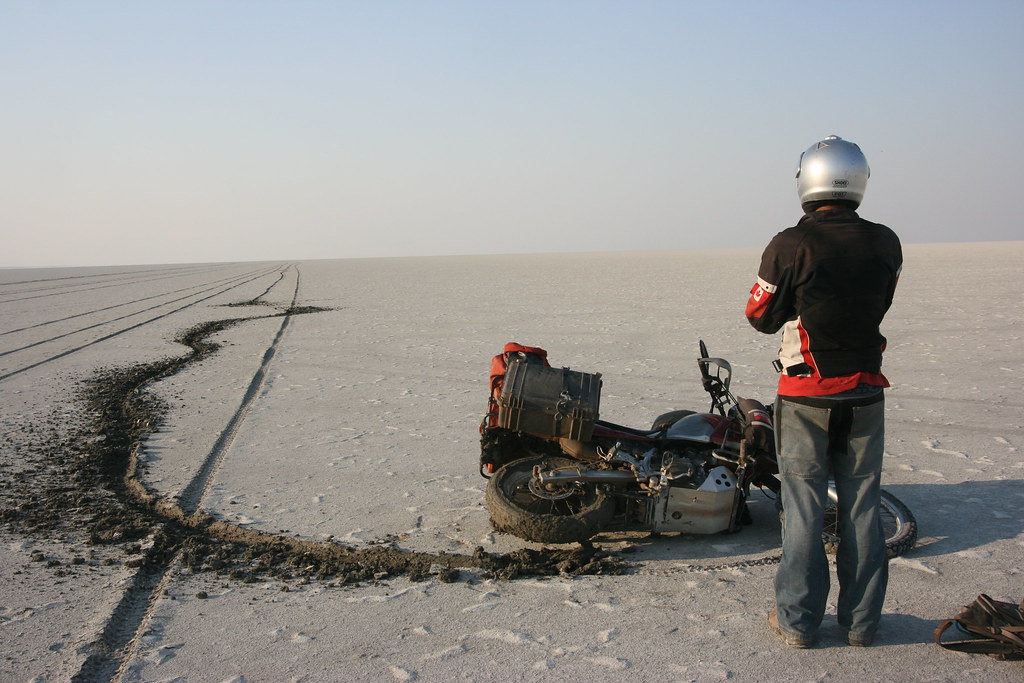
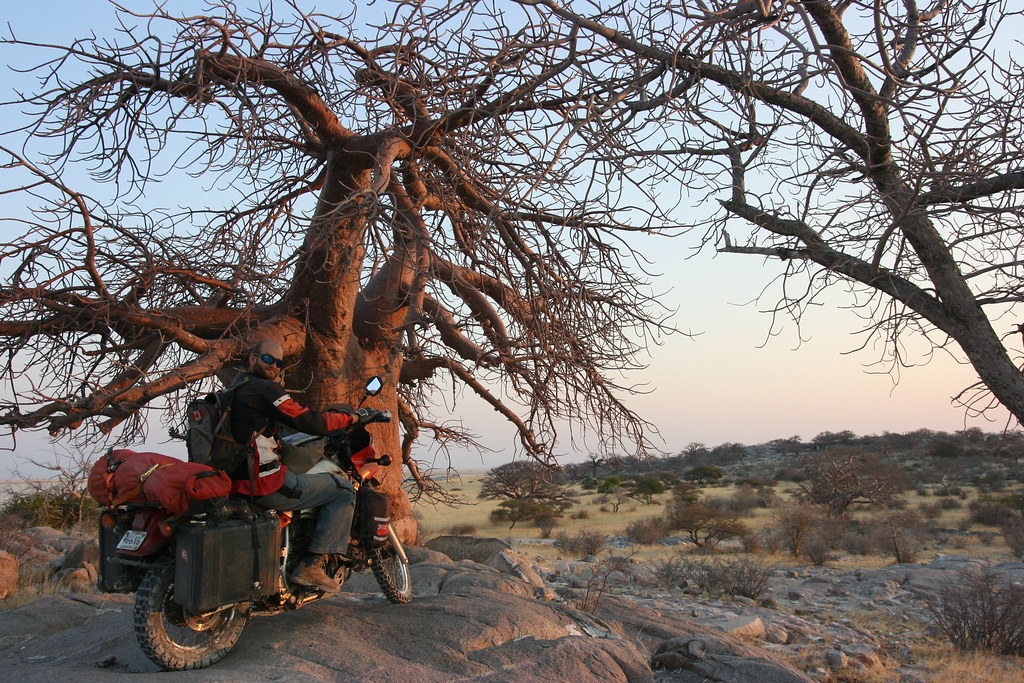
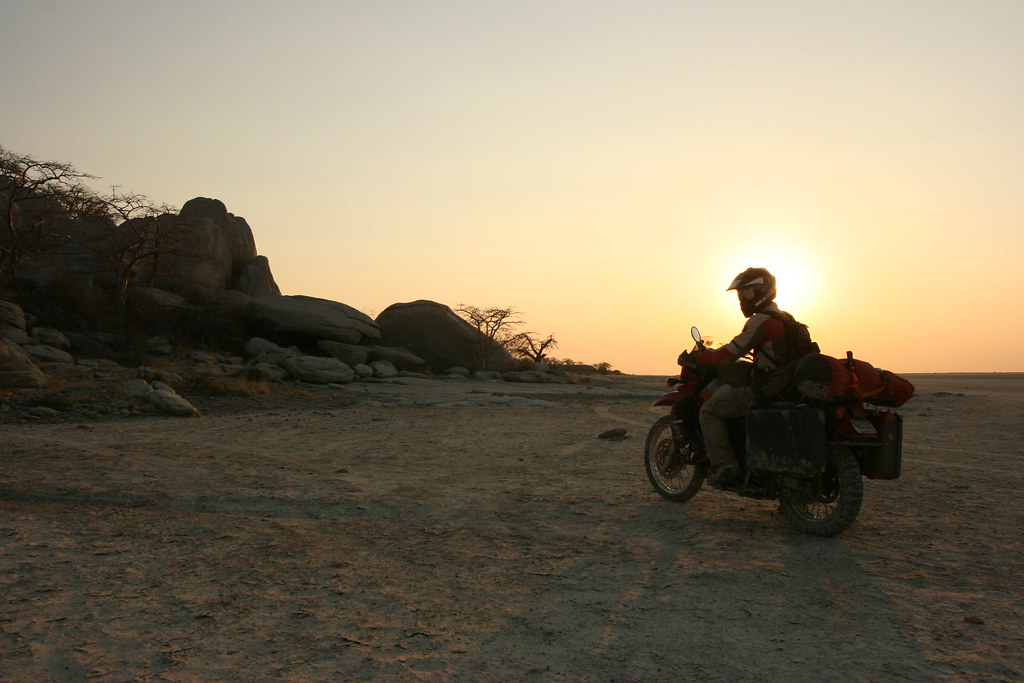
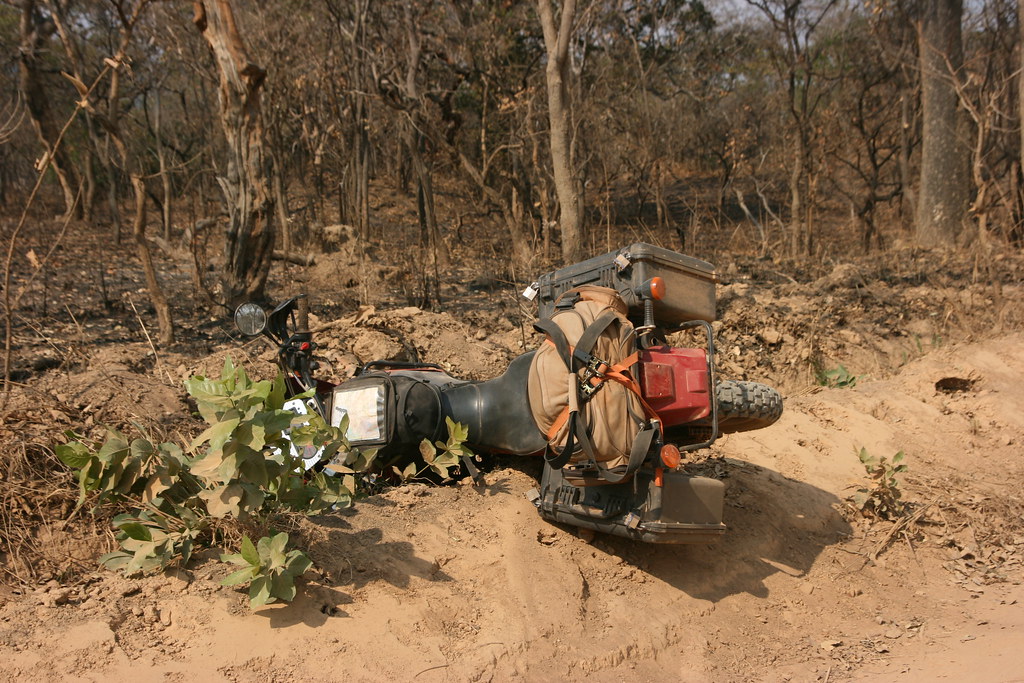
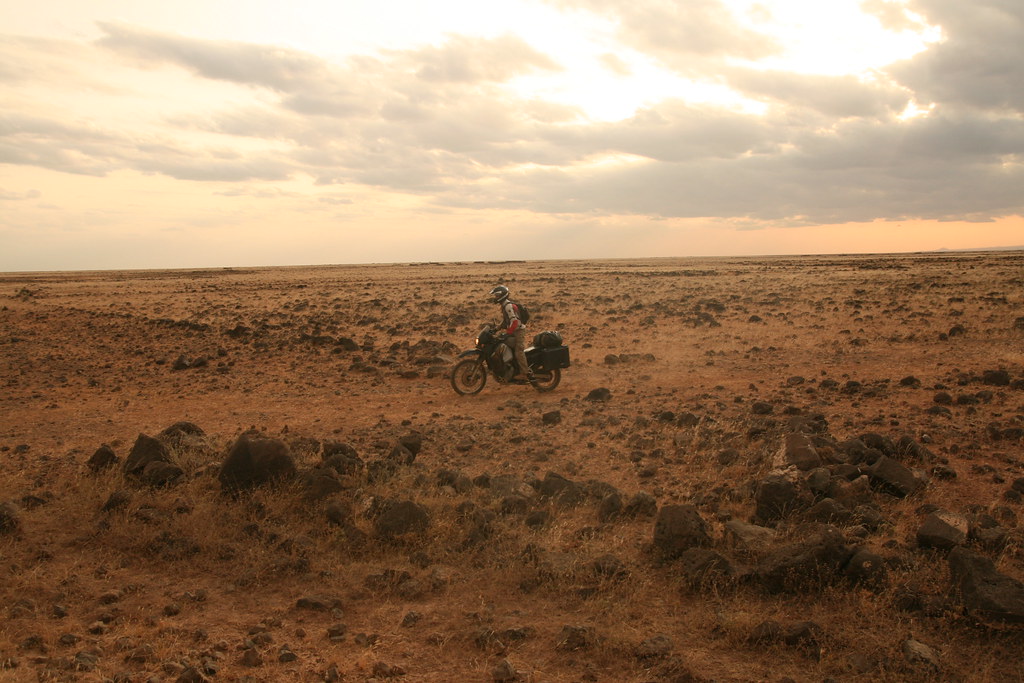
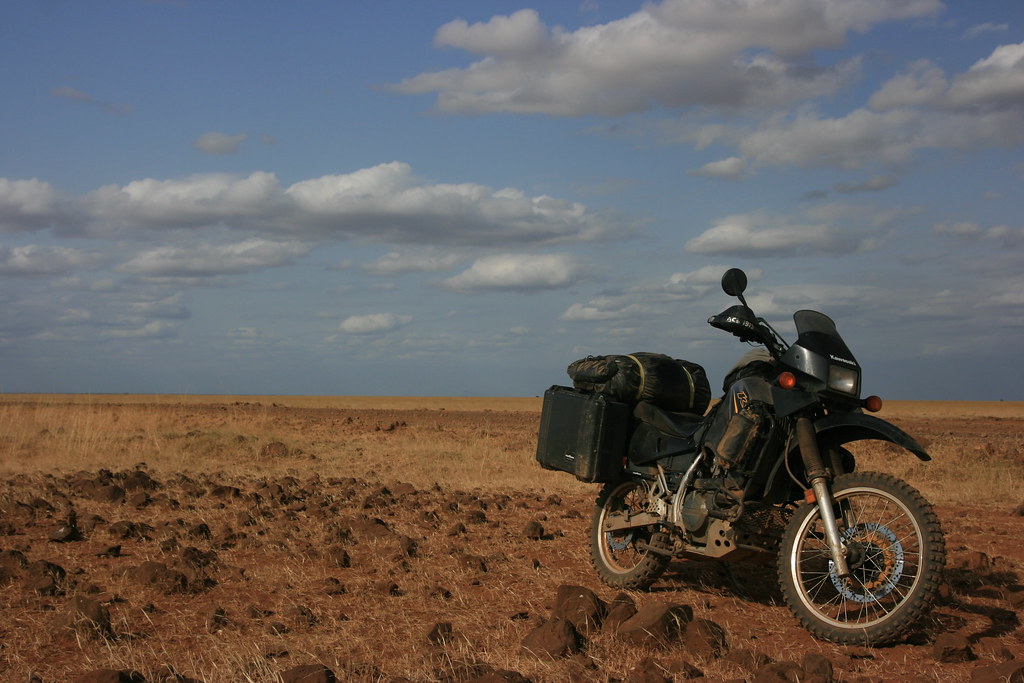
PS. Despite what I’ve said it would be amiss of me not to show you some of the spectacles that Namibia has treated me to over the past few days. Below is a shot of some of the stunning landscapes I passed through yesterday evening, and below that is a shot of my bike next to some of the enormous sand dunes on the Skeleton Coast (I got my bike stuck getting that photo). But probably one of the greatest sights, which I can’t show you, is the night sky. Truly spectacular, and like nothing we get back home. I recommend a visit for that alone.


Monday, February 15, 2010

The swan song of an epic trip

It has been a full eighteen months since my last blog entry and much has happened in that time. The first decade of the 21st century has past; the world economy has fallen into (and is slowly emerging from) one of the biggest recessions in history; and space enthusiasts around the globe have celebrated the 40th anniversary of the moon landing. But one other much less significant thing also happened in that time - Team CanUK finished its London to Cape Town adventure.

For those loyal readers who have followed this blog since its inception, that final piece of news may come as a bit of a surprise. You'd be forgiven for thinking we never made it to Cape Town such has been the delay in my writing. But finish we did.

Why the delay then? Simply because the fate of one team member (my bike) and the story has only been concluded recently.


When I last signed off, the trip was on a bit of a cliffhanger. Jerry had lost one of his panniers in Tanzania and had boldly set off alone for Dar Es Salaam to replace his paperwork. My bike had ground to a halt in Malawi and was sitting in pieces waiting to be trucked to Johannesburg for repairs. And Tyson and I were setting off on the back of Rosa - west toward Zambia.

Even though it was over a year ago, the memory of sitting on the back of Tyson's bike as we rode out of Lilongwe is still with me. I remember glancing over my shoulder and watching my bike disappear into the haze behind us. The plan was to get it trucked to Johannesburg and repaired. That way we could reunite for the final triumphant stretch into Cape Town. But as I saw the Odyssey vanish into the distance, I couldn't help but think it would be a long time until I saw it again.

As it turned out it wasn't my bike that got me to Cape Town in the end. Instead it was the kindness of strangers, the help of a good friend, and the durability of his trusty bike. Those are the heroes of this final chapter of the London to Cape Town Adventure and to whom my attention turns now.

Jimmy - the South African ball buster
The first of the strangers that deserves a mention is Jimmy McDaniel - the hardy South African owner of the Dirt Bike Centre in Lilongwe, Malawi. Jimmy was easily one of the most interesting characters I met on the trip.

On a continent where waiting is to be expected, it's always nice to have someone around who can tell fascinating stories to pass the time. Jimmy is just such a fellow.

At 68, few people can convincingly say they've hunted sharks, raced dirtbikes, and ridden one handed into an enemy ambush while firing a machine gun. But Jimmy is one of those people.

Yet even though Jimmy may sound like the hero of a conventional action thriller that's not the reason I mention him here. Instead it's because of his trustworthiness, generosity and sheer bloody mindedness, without which I wouldn't have been able to abandon my beloved bike, confident in the knowledge that I would see it again (someday).

Jimmy's Dirt Bike centre is the closest thing to a Kawasaki dealership this side of the South African border. But that's not saying much. Far from a gleaming dealership full of expert mechanics and tools, Jimmy's business is relatively small, and gets most of its revenue by selling small bikes to the wealthier residents of Lilongwe. But what the Dirt Bike Centre lacks in parts, tools and equipment, it more than makes up for with character, knowledge and contacts. And that's all down to Jimmy. Having worked for Honda for the best part of his life, he knows his way around a motorbike and he knows when one is buggered beyond the repair skills and tools of his mechanics. And “buggered” was the unfortunate diagnosis that befell the Odyssey. But far from being defeated this spurred Jimmy on. And, after a few days of frantic phone calls and conversations, many of which ended with "well, you're bloody useless then", Jimmy seemed to have managed to organise safe passage of my bike to one of the few places on the continent that stood a decent chance of fixing it - South Africa.

Now if you're sitting back in the UK thinking - that doesn't sound particularly difficult - you're in good company. Tyson and I thought organising a truck to take a bike across a few borders would be a relatively simple and relatively cheap too. How naive we were.

Riding off into the distance we were blissfully unaware of the nightmarish logistical challenge that faced Jimmy. Truck driver after truck driver promised to transport the bike to Johannesburg, only to flake out days (sometimes weeks) later. A fuel shortage in Zimbabwe made matters worse by limiting the number of trucks crossing the border. So in the end, it took two and a half months, a 10,000 rand bribe (£700), and tireless efforts from Jimmy to get my bike to Johannesburg. How can you explain such bothers? Jimmy's simple answer was "TIA" - This Is Africa.

Heiko - The German living the dream
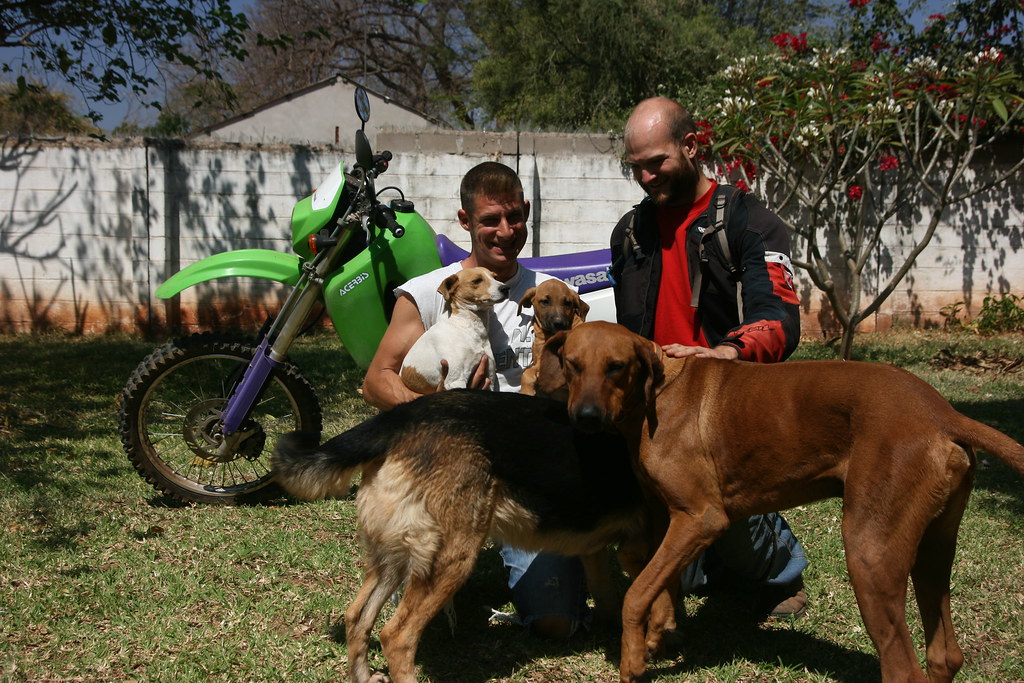
The next stranger worthy of a mention is Heiko, a friendly German who lives happily in Livingstone, Zambia with his four dogs.


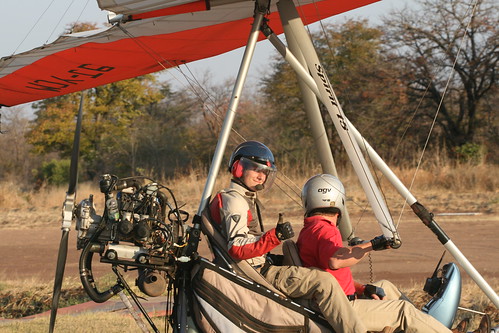
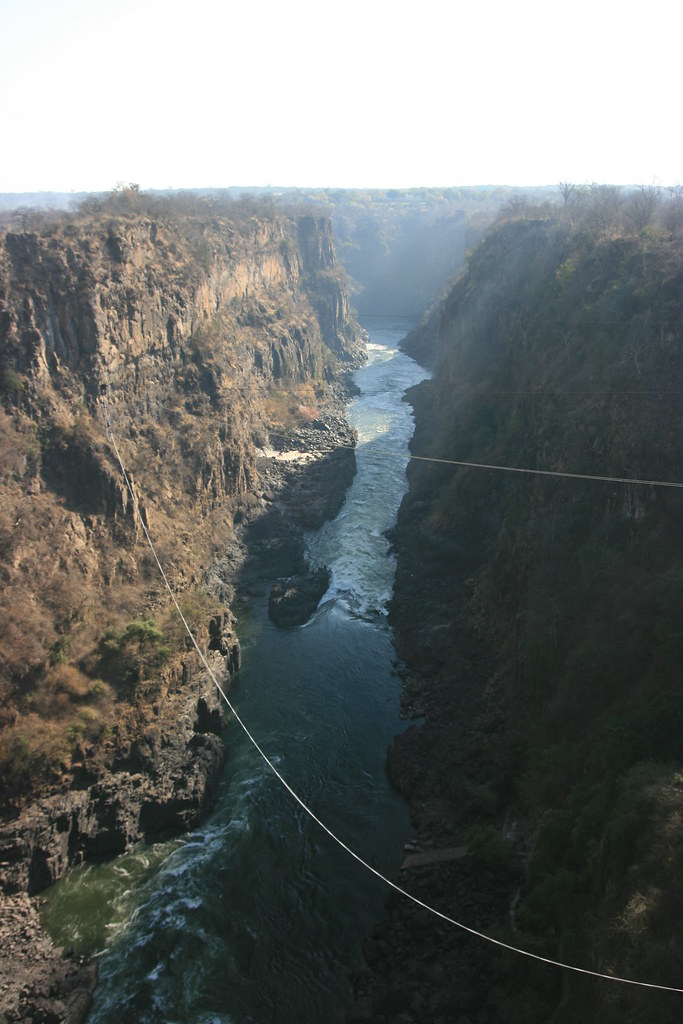
Tyson and I met Heiko after being disappointed at Victoria Falls. We’d both been planning to do a bungee jump over the falls ever since we set off from London but such was our luck, the bungee was closed on the day we turned up. So, as a consolation prize, we decided to take a microlight flight.


Seeing Victoria Falls from the air was breathtaking - it allows you to really appreciate the scale of the vast fissures of rock over which the river flows. Add to that the thrill of flying in a microlight (which has to be the closest thing to riding a motorbike in the air) and the chance to see hippos, elephant and giraffe from the air, makes it definitely worth it.


But to seal the deal, Tyson's pilot - Heiko - was a keen rider and massive KLR fan. He had biked across Africa several years earlier and had fallen in love with the place. He now spends his days living the dream - riding his bike, playing with his dogs, and flying over Victoria Falls for most of the day. An enviable lifestyle if ever there was one.
Such is Heiko’s fondness of the KLR that he’d spotted us from the air several hours earlier. Such was his generosity that after the flight, he invited us to stay with him and his dogs. Happy to spend an evening swopping adventure stories and playing fetch, Tyson and I followed him back to his house and wittled the hours away talking bikes and getting advice.

Two things Heiko said made a big difference to my trip. The first was the revelation that many KLRs suffer the same fate as mine – apparently losing oil is a common fault. So common in fact that Heiko used to make a decent living rebuilding KLR engines back in Germany that had run out of oil. That gave me some comfort that my duffer’s negligence wasn’t entirely unique.

The other bit of advice was on route choice. Heiko recommended that we travel through the Sowa salt pan in Botswana on our way to Johannesburg. And that little off-road excursion turned out to be one of the most thrilling parts of our trip.

Getting to the pan was by no means trivial. We had to ride through sand for a few kilometres, which is challenging enough when you’re on your own, but all the more difficult when you’re riding two up. But after a bit of relay riding (one guy riding the other guy running) we made it to the pan.

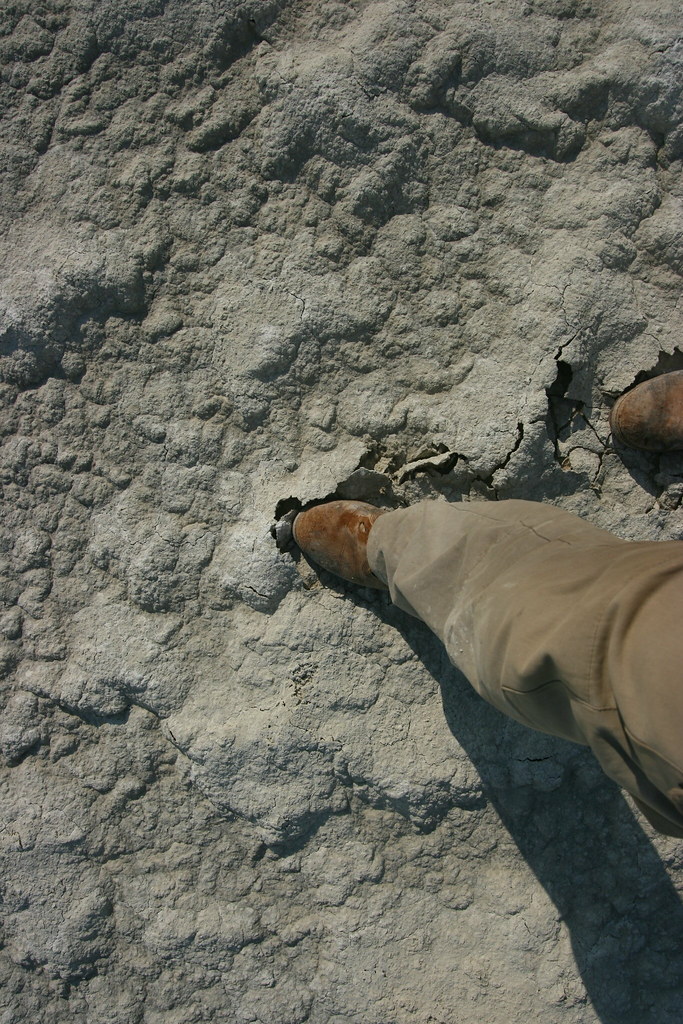
Of all the places I visited on the trip, the Sowa salt plan was one of my favourites. I have always wanted to go to the moon, and the pan is the closest that I have been to experiencing it. Made from a dry lake bed, the salty crust cracks as you walk over it so you leave explorer-like footprints as Armstrong and Aldrin did forty years earlier.


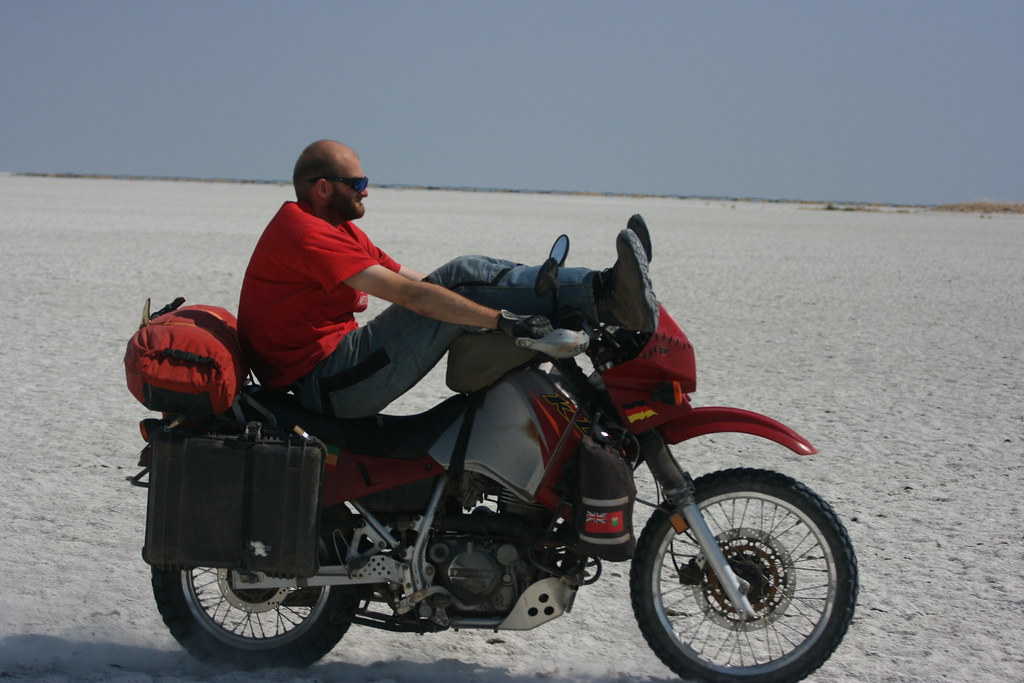
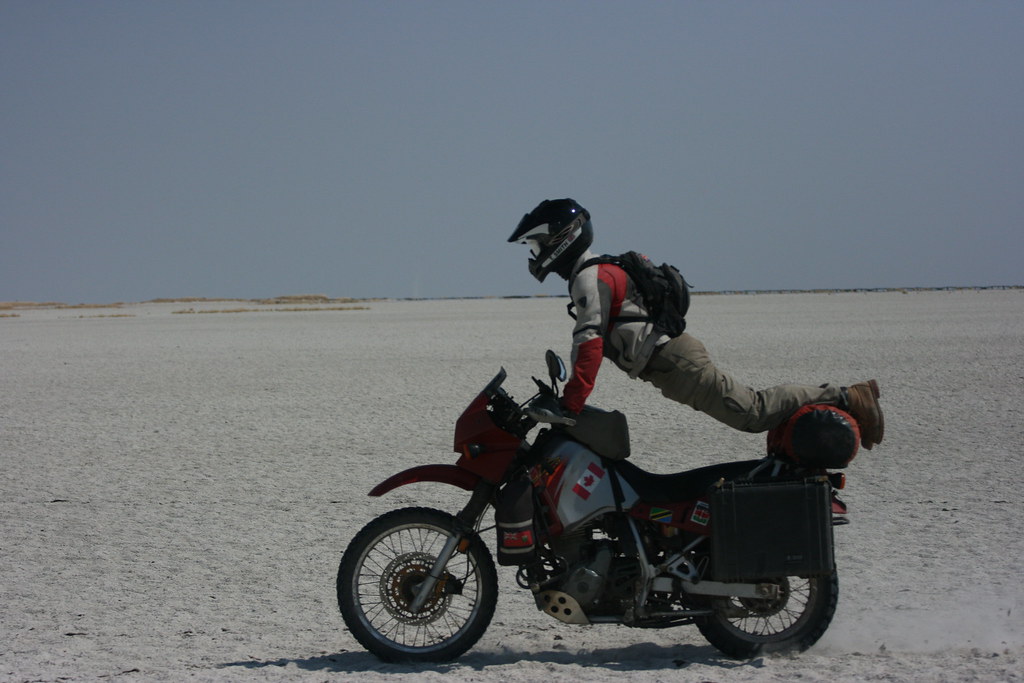
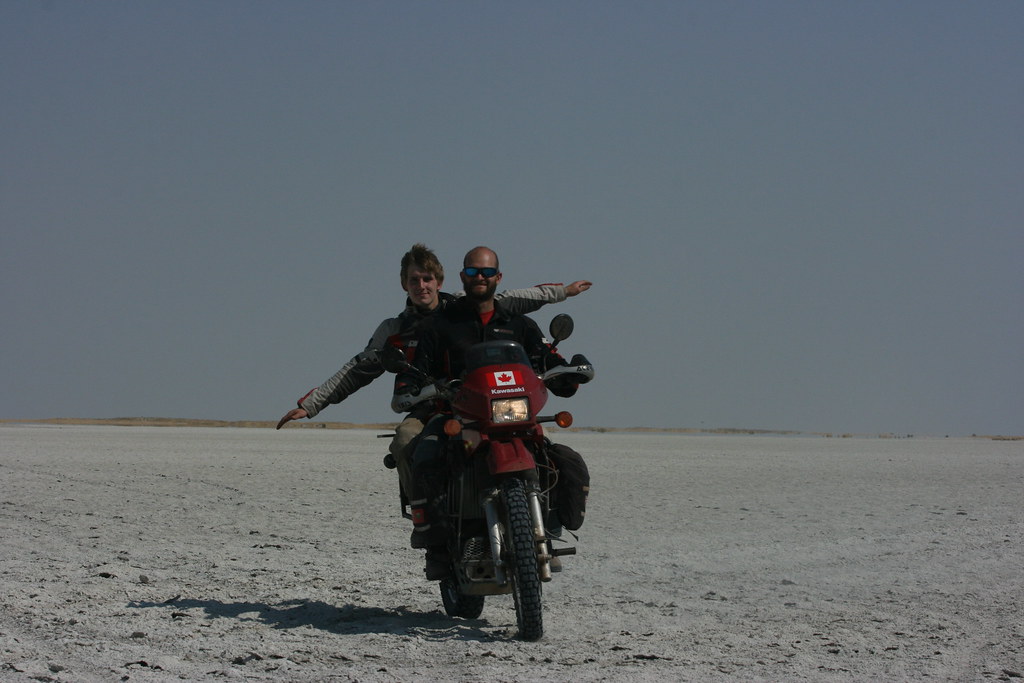
The flat surface of the pan also provides the ideal setting for honing stunt riding skills. And for much of the afternoon, Tyson and I tried pulling off our best moves as well as recreating the famous cover shot from the ‘Motorcycle Diaries’.


But after several hours of tomfoolery we still had a hundred kilometres to cover before nightfall and decided to push on further south through the pan. Little did we know that the coming hours would be some of the most difficult riding of the trip.

The trials began at the southern end of the pan when Tyson noticed Rosa was beginning to overheat. His response was to stop and allow the bike to cool off. This was the sensible thing to do, but turned out to be a bad move. The reason Rosa was overheating was her rear tyre was slipping on a thick layer of mud, which was lying hidden just below the salty surface. As we stopped the bike sunk into this slick muddy layer, meaning we lost traction completely. The tried and tested technique of gunning the throttle only served to splatter mud everywhere and dig the bike deeper. So our only option was to tip the bike over, scrape off the mud with our bare hands and drag the bike to slightly firmer ground and attempt a restart. Three attempts later and we were back up and running. But now, anxious not to get bogged, we were travelling fast. And then it happened. Slowly at first, but the bike began to weave. Tyson did a good job of controlling the bike’s momentum, so we continued to travel in ever increasing weaves. But there was no stopping the inevitable and after two hundred metres or so, we crashed.

Crashing had become a regular part of the trip for me, but this was the first time I had experienced it as a passenger. It was an odd experience. You know the bike is going to go down, but there is nothing you can do about it. So you just accept your fate, shield your camera, and brace for impact.


In the end, it was a fairly minor high speed slide out – the main result of which was to cover us both in stick muddy. But fair’s fair and Tyson relinquished the driving seat only for me to repeat the favour about an hour later when we ploughed into some deep sand. And with darkness falling we proceeded to plough on into the night through some of the most challenging deep sandy ruts that we had seen. Relay riding was required for a couple of hours, and by the end of it, we emerged from the pan knackered, humbled (as we weren’t the riding masters that we though), but overall relieved. An unforgettable experience.


Andre - Gatekeeper of Johannesburg
Several days later on the freeway just on the outskirts of Johannesburg, a shiny green sports bike sped past us. Strangely, instead of blasting off into the distance, the rider slowed down to our more modest speed, and beckoned us to pullover. And that’s how we came across Andre who, like Heiko, was another KLR enthusiast interested in finding out where we’d come from and where we were going. We went through the usual story, and Andre responded with the generosity that must come naturally to South Africans – offering us his house and workshop (he was an electrical engineer and part-time master mechanic) as a safe haven from the mean streets of Johannesburg. We hadn’t decided our plans yet, as they were conditional on whether my bike had arrived and been fixed, but we thanked him graciously and agreed to call him later.

At Russell Campbell Motorcycles – the Kawasaki dealership that were expecting delivery of my bike - we learned the sad truth. Not only was my bike not fixed, but it still hadn’t left Lilongwe. This was a heavy blow, as it was now clear that I wouldn’t get to finish the trip on the Odyssey. News from Jerry, who had been making fantastic progress in catching us up, was similarly downbeat – as he was stuck at Victoria Falls waiting for his replacement documents to arrive. And so sadly, the three amigos didn’t get to ride triumphantly into Cape Town on our trusty steeds together. A massive shame, but then it wouldn’t be an adventure if everything went to plan would it?

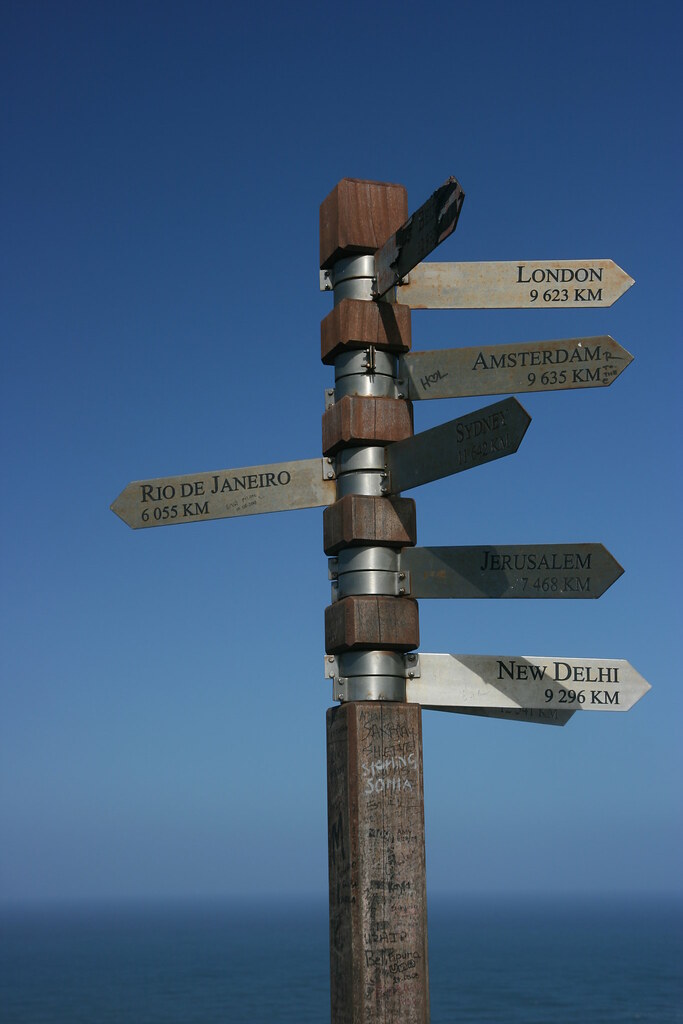
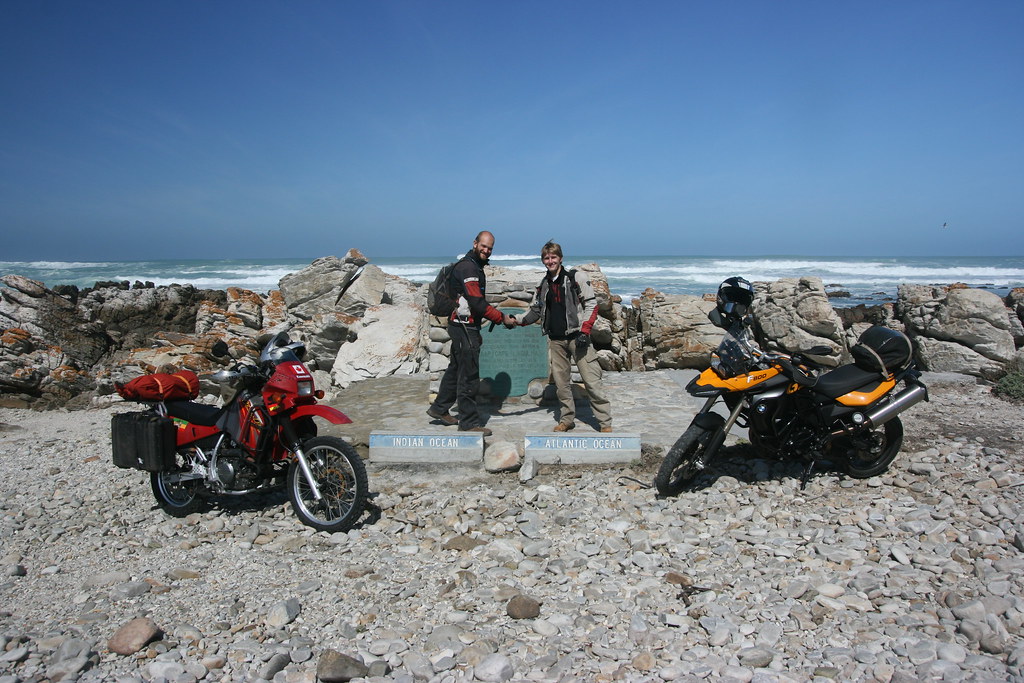
And so we did our best to cobble together a happy ending. With copious amounts of help from the folks at Russell Campbell’s and Andre, we managed to: organise a few repairs on trusty old Rosa (to ensure she made the final leg); hired me a showroom fresh BMW bike (a farcical off-road machine, but fast and fun); and even recruited Andre to join us for the final leg of the trip. And so, a different three amigos on a different set of bikes did set off from Johannesburg, and a week later, after riding through a snowstorm, experiencing another terrifying crash (this time involving Andre, a reckless driver and another lucky escape), jumping off the world’s highest commercial bungee jump (it was very high), and getting our name in the paper (see here) we reached Cape Aghulas – the most southerly point in Africa – and a little later, Cape Town. We had made it. And it was a good feeling.


Two weeks later, after his own epic adventure, Jerry triumphantly rolled into Cape Town on his battered bike. And 18 months after that, following extensive repairs, my bike has been lovingly restored by Andre and Co. It is now ready for the next big adventure, and I am back in Johannesburg. Time to saddle up.

Friday, August 22, 2008

A Duffer's Negligence

Riding a motorbike is a lot like playing a game of golf. You're outdoors, taking in the scenery, the sun's on your face and you're having fun. But like golf, sometimes you have your good days and sometimes you have your bad ones. It was on the road from Kasulu to Mpanda in Tanzania that Jerry was having a bad day. We'd already covered 250 miles on Tanzania's dusty dirt tracks without too much bother. But this road was different. Fesh-fesh, rocky terraces and deep sandy rutts.


It was the rutts that had Jerry's number. Like a particularly deep bunker, Jerry often found himself in the rutts, and when he did he found it difficult to get out. In the 150 mile stretch to Mpanda he dropped his bike 14 times – seven of which were in a sandy section not more than two miles apart. Par for the course was about three or four drops - at least that's how many times Tyson and I came off anyway.


When you get stuck in a mental funk, either playing golf or riding a bike, it's very difficult to pull yourself out. But Jerry shook off the yips and emerged from the road to Mpanda triumphantly - riding the last fifty miles at break neck pace. Despite falling multiple times, both he and Buffy (his bike) seemed unscathed. The same couldn’t be said for Tyson and I though. Tyson, who had gone on ahead to find water, had been forced off the road by an oncoming truck. That spill, or one of his others, resulted in a worryingly large hole in his fuel tank. So with gas pouring onto the ground at an alarming rate, he tore in to Mpanda to get a hasty weld.

As for me, I was riding in the rear gunner position. Riding at the back of the group is a nice place to be. You don’t have to wait around. You’ve always got a bike in front of you as entertainment (just in case the scenery gets dull), and you can muck about without putting the other guys off. But you’re also responsible for picking up anyone who falls over and for looking after yourself.

On a bumpy bit of fesh-fesh I stole a rearward glance at my left hand pannier – the metal rack which holds my case onto the bike had developed another crack and I thought it might have sheared. But taking my eye off the road was a bad move – like looking up in the middle of a golf swing. With my eye off the ball, my front wheel dug into the ground, twisting awkwardly and sending me crashing to the ground. On the way down my foot got caught under the pannier trapping my ankle underneath. I yelled out in pain but no-one was around to hear. I was riding at the back after all.

Fortunately it was only a sprain and I could still ride without too much discomfort. My bike suffered minor injuries too – a bent front fairing, wonky handlebars and a few more scratches to add to the growing collection. Together we limped in to Mpanda just as the sun was setting.

The following day, we did our best to service the bikes and get them back to roadworthy condition. It was late in the afternoon by the time we eventually got going. Despite our late start we had the ambitious goal of making it another 150 miles to Sumbawanga (whoever named the towns in western Tanzania had a sense of humour).

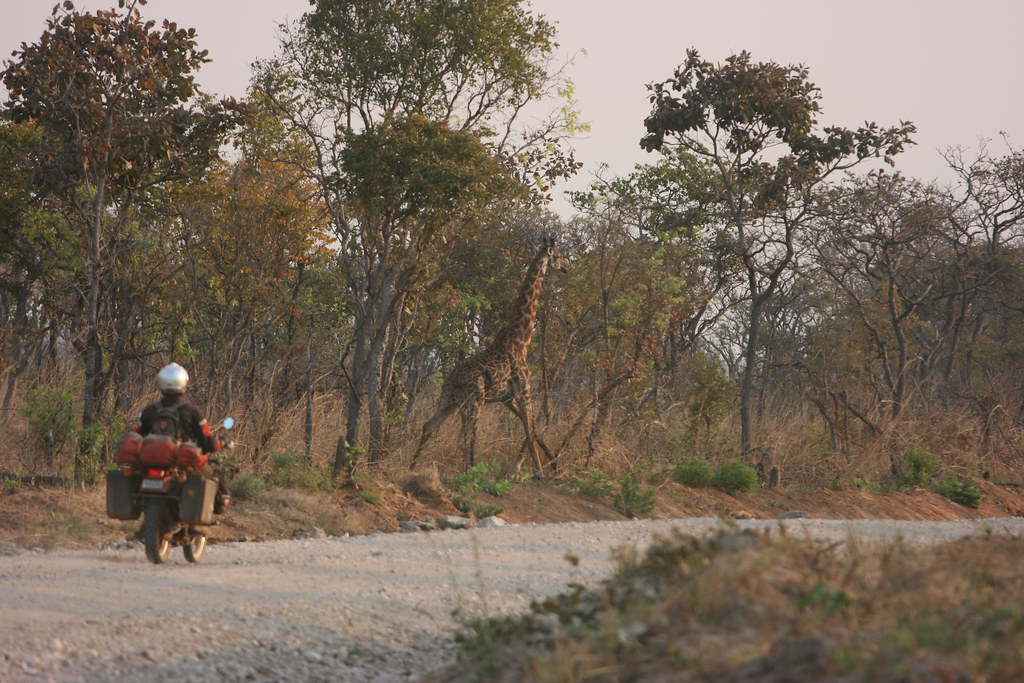
The ride out of town was a pleasant one. Smooth tracks lead us through Katavi National Park and for once I was leading. As I rounded a corner I saw a majestic sight – a lone giraffe standing by the side of the road. She looked at me curiously as I slowed down. Then as I edged closer she dashed into the trees camouflaging herself expertly. Seeing a giraffe run is quite a sight to behold – they gallop in slow motion as if their hooves barely touch the ground. Graceful.

We saw more giraffes as the warm red sun dipped slowly below the horizon. At dusk, we had the option to camp or push on a bit further and make up some miles. The lights on the KLR aren’t the best in the world and you’re always advised against riding at night in Africa. But we pushed on anyway as it was still a long way to Sumbawanga. We got a few miles before it got so dark that I needed to turn on my high beams. But as I flicked the switch all of my lights went out – a classic sign of a blown fuse. Fortunately Tyson was looking in his mirrors and circled back to help out. As we were replacing the fuse, a ranger pulled up to warn us that there were lions around. Our repairs gained a sense of urgency after that. Good thing we didn’t camp.
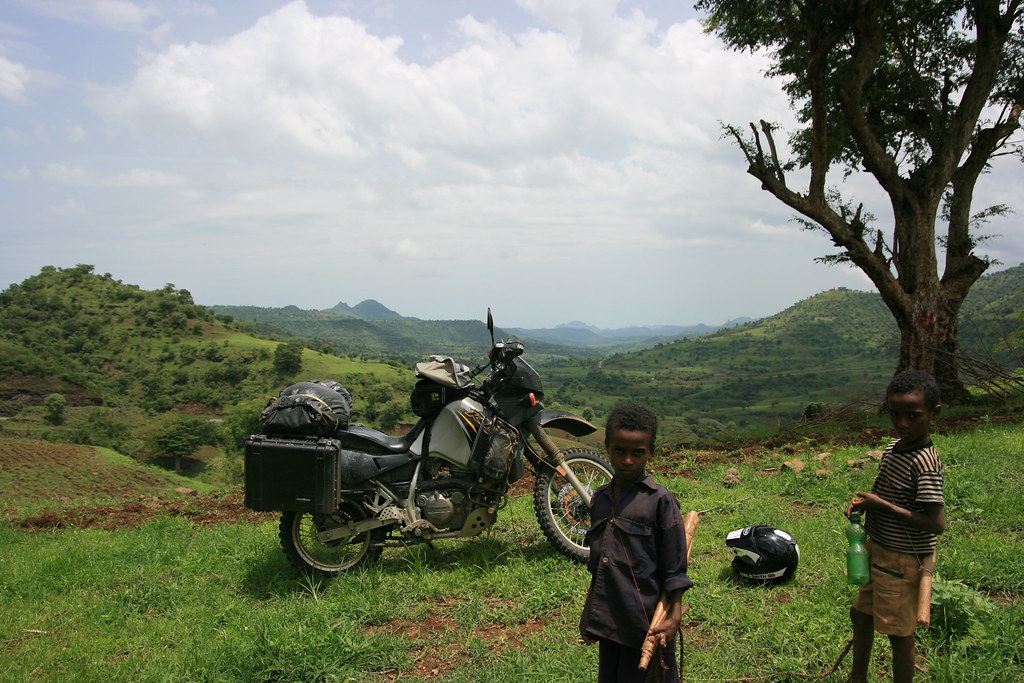
We pushed on for another 30 miles or so, Tyson and I riding side-by-side, his high-beams lighting the way. As we passed a wildfire we pulled over to wait for Jerry. Half an hour went by before we saw his headlight wobbling slowly towards us. Something was very wrong with his steering. Like an extreme version of the problem I had in Europe (a loose steering bearing). We decided to camp again that night (now safely out of lion territory) and diagnose the problem in the morning.

It was Jerry’s birthday when we woke up, but Buffy hadn’t got a present for him. Far from it. An initial inspection of her steering revealed nothing wrong until Tyson spotted an ominous crack in her frame. I’ve done a lot of research for this trip and read a lot about KLRs, but I’ve never heard of anyone cracking their frame before. This could be a trip ending incident. It’s still a bit of a mystery as to what caused the crack. Jerry hadn’t fallen that day, so the road to Mpanda must have been the culprit. One of his 14 spills must have weakened the frame causing it to slowly crack over the course of the day.


We rode slowly in to Sumbawanga to look for a mechanic. It was Sunday and we figured everything would be closed. But good fortune shone on us again. Not only did we find a mechanic, but we found a competent one. Within three hours he had completely stripped Jerry’s bike, welded the frame (which had cracked in two places – effectively splitting the bike in half) and put the whole thing back together. We decided to celebrate Jerry’s good fortune with a night on the town. But Jerry’s luck didn’t last for long.

The following day on the ride to Tunduma there was another mishap. The roads had gotten a little bumpy again and Jerry was concerned about his frame. So concerned in fact that he didn’t notice one of his panniers fall off. Tyson’s pannier had slipped off his bike three times on the same road but each time he had noticed quickly enough to circle round and pick it up. Everytime a local had already got the case in their hand. On one occasion a car even picked up the case and Tyson had to follow it for two miles before it would relinquish his luggage.

Jerry wasn’t so lucky. He didn’t notice his case was missing for 100km. And, since our cases look exactly like those that drug dealers might use to haul vast quantities of cash around, it’s almost certain that it has been prized open in some Tanzanian village.

There was a bit of cash in the case, but the real expense, and the reason that Jerry is now in Dar es Salaam rather than here with Tyson and I in Malawi, is because all his ID documents were in that case. There have been four occasions when Jerry thought he might have to end his trip early. None of us thought it would be paperwork that would be the final nail in the coffin.

But if you’re thinking that Jerry is the negligent duffer in this story then you’re mistaken. That unfortunate title falls to me. Jerry is well on his way to replacing all his documents and should be continuing south to the Cape before long. The journey on my bike has come to a more abrupt end however.

Since entering Malawi, Tyson and I have been soaring on the smooth blacktop travelling at highway speeds for the first time in a long time. The roads are in excellent condition and a nice reward after the trials of Tanzania.


It’s a harsh irony that in such idyllic riding conditions, my bike (The Odyssey) has finally stopped working. And it’s not her fault either, it’s entirely mine.

Bike maintenance is a crucial part of a trip like this. Everyday you check your tyre pressure and your engine oil. But over the past few days I’ve got sloppy with my maintenance. Too preoccupied with my front fork seal, which has been leaking oil since Sumbawanga, and my tyres (which got a puncture shortly after Tunduma) I forgot to check my engine oil. That’s a cardinal sin in the motorcycling world and one that I’ll pay for dearly. Oil is the lifeblood of the engine, and without it things can seize up pretty fast. In normal conditions a bike won’t use much oil and the only way it can get dangerously low is a leak, which is obvious by a thick tarry covering over the engine. But occasionally the engine can use up large quantities of oil unexpectedly. It was one of those unexpected occurrences that happened in Malawi.

Maybe it was because we were riding at over 80mph for the first time in ages. Maybe it was because we covered over 400 miles that day. Whatever the reason, the ride was taxing the engine and burning oil. 50 miles north of Lilongwe it finally conked out. First I thought it was a simple problem – like a worn out spark plug. But when Tyson circled back and asked me how the oil was doing I realised I hadn’t checked it. Glancing down at the oil gauge window, I saw nothing there. Even when the bike was fully tilted over there was no sign of the black stuff anywhere.

With my bike going nowhere, and Tyson’s electrical problems back, we both had to load our bikes onto a truck to take us the final 50 miles to Lilongwe. And that’s where we’ve been for the past few days. Tyson’s electrics are fixed, but unfortunately the problems with my bike are terminal. The lack of oil in the engine has damaged the camshaft and the cam-seat has worn out. That makes riding impossible, and with spare parts and tools thin on the ground out here, that means my bike will have to be trucked to the nearest Kawasaki dealer which is in Johannesburg. A sorry way for The Odyssey to finally come to an end – 17365km from London.


So what now for this silly duffer? Well. Tyson has kindly agreed to give me a lift to Johannesburg on his beloved bike - Rosa. Two-up is not the most fun way to travel, so we’ll be keeping a close look out for cheap local bikes. Maybe I’ll be able to snag myself a red devil, just like Claudio, the cameraman who wrote-off his bike on the Long Way Round. Either way, it certainly beats a bus.

Perhaps it’s a fitting way for Rosa to finish the journey as well. Tyson named her after La Poderosa (‘The Mighty One’) – the bike that Che Guevara and Alberto Granado rode two-up on their adventure in the Motorcycle Diaries. If she carries us all the way to Johannesburg she certainly will have earned her name.

Thursday, August 21, 2008

African Wildlife II - Enchanting Uganda

After leaving the Brit-like sanctity of Kenya we crossed onto the manic roads of Uganda. Strewn with potholes big enough to tip lorries over, the Ugandan roads are some of the worst we’ve ridden on. Better not to have paved them at all than allow them to deteriorate in to such a patchy state.

Any normal driver treats a pothole in much the same way as a speedbump, slowing down carefully to gently roll over it. On a dirt bike it's a bit different. Ususally you gun the throttle and hope that gravity is feeling generous. If she is, then you'll soar over the top and land happily on the other side. If she's feeling mean, you'll receive a nutt-busting bump as penance for your bravado. But whether you're driving a car or riding a bike, the way to go over a pothole is straight. Or at least it should be. Not so in Uganda though. Most Ugandan drivers come from the homicidal school of motoring and prefer to brake harshly and swerve recklessly around potholes, sideswiping whoever might be in the other lane.

On one occasion I was following an articulated truck which suddenly slammed on its brakes and skidded to a halt. I just about crashed in to the back of it. Was there a child that had run out? A dog perhaps? Had a tree fallen over? No. There was a pothole and the driver was more concerned with his suspension than who might be following. If that were an isolated incident then it would hardly be worth mentioning here. But in Uganda, thanks to the insane minibus drivers, that sort of behaviour is the norm rather than the exception.

Fortunately the trials of the Ugandan roads were all worth it when we got to Mburo National Park. We arrived at night, as is usually the case, and there was a stretch of dirt road in front of us. But there was another more immediate challenge too. The headlight on Tyson’s bike was barely working - his electrical problems had returned yet again. But rather than camp near the road, our solution was to ride the 15 mile stretch to the lodge side-by-side with my headlight lighting the way for both of us. It was like a computer game - riding three feet off Tyson’s rear wheel - and like any computer game it had levels.

Level 1 – the ride to the lodge – was reasonably challenging on the rutted gravel, but Tyson and I managed to bump our way to the end without incident. Jerry on the other hand took a wrong turn, forcing us to go back to look for him and for Level 2. With the terrain now familiar we egged each other on to go faster, skidding round the corners and braking only for the occasional zebra crossing (that’s literally a zebra crossing the road). Having ridden all the way back to the park gates with no sign of Jerry, we turned back for Level 3. Even faster this time and standing up we nearly made it the entire way. Tyson did actually complete the game. But a slight twitch on my front wheel sent me sliding out on the final corner. I stopped the bike from skidding into the adjacent ditch, but because I was standing I failed to jump off in time to stop the bike from falling over. The bike toppled on to its side in a cartoonish slow motion fall. Gameover. Can I play again?

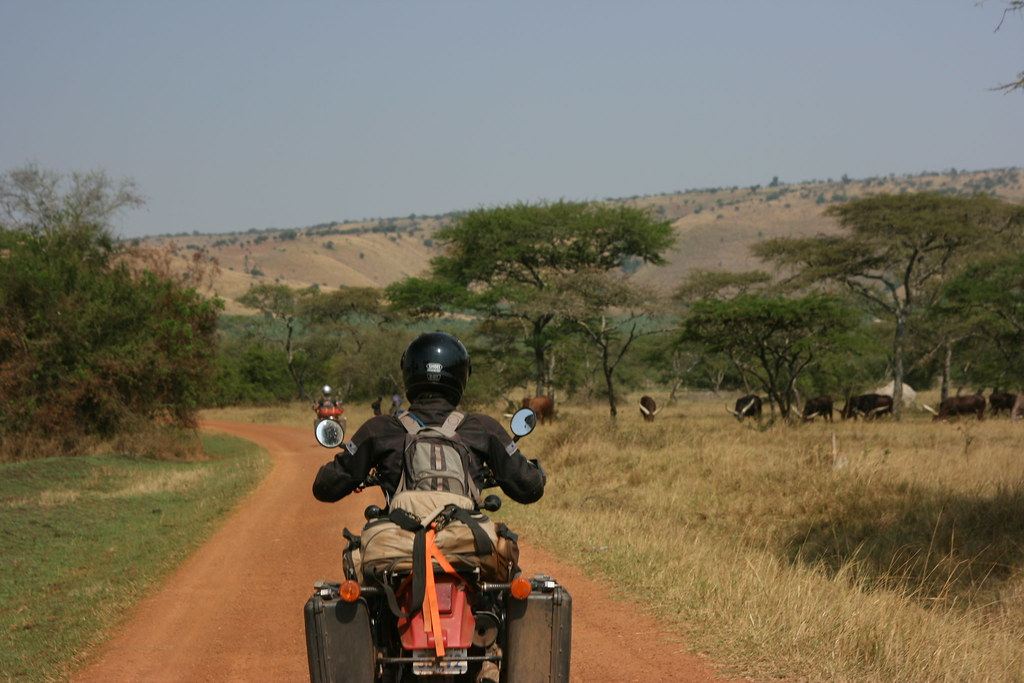
After the rangers had found Jerry, we pitched our tents on the shore of Lake Mburo, falling asleep to the sound of warthogs grunting outside our tents. The following morning we got up for a wildlife tour Team Canuk style. With our cameras dangling round our necks we rode through the park one-handed using the other hand to snap blurry pictures of zebra, impala and buffalo that would occasionally cross the road. We’d seen these animals just a few days before, but the experience was much more memorable on a bike. A motorcycle safari – how many people can say they’ve done that?


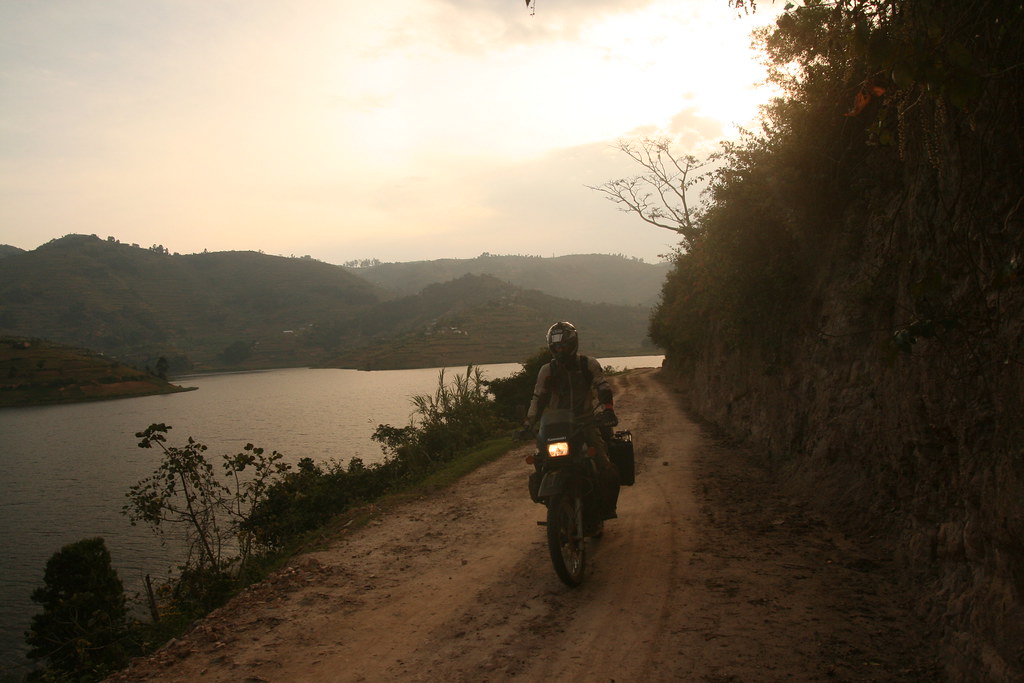
But the best was yet to come. Making our way further south in to the heart of Uganda the scenery turned from the mundane to the spectacular. Volcanic mountains jutted sharply in to the sky creating winding mountain roads around crisp blue lakes. Our destination was Kisoro and the Parc de Volcan – home of the gorillas in the mist.


It costs five hundred dollars to go gorilla tracking and only eight people are allowed to do it per day. You have to book months in advance to secure a place and even then double bookings can mean you don’t get to see the beautiful creatures at all. We had written off any hope of seeing the gorillas. We hadn't booked. Our calls earlier in the week had proved fruitless. But Tyson’s desire to see them – a childhood dream of his – was enough for us to go through the motions anyway. And what a good thing we did. Fortune shone on us and we managed to secure three places for the very next day. Unbelievable luck.

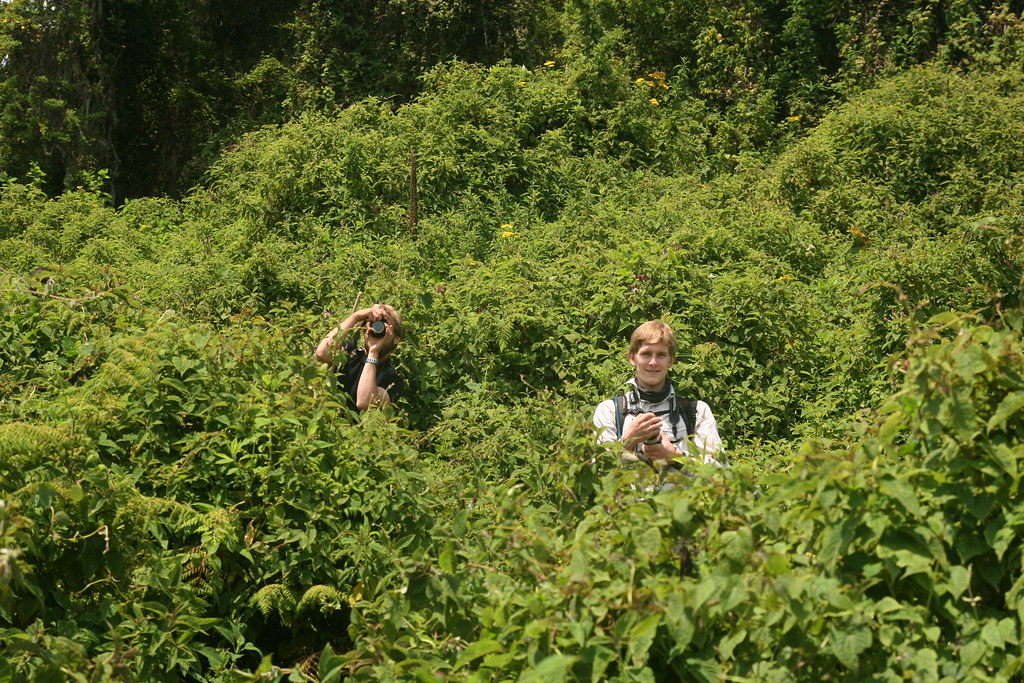
The mountain gorillas are found in the Impenetrable Forest – an area named for the endless shoots of bamboo that block your path. It’s a bit of a misnomer. Armed with a machete you can hack your way through it. But it’s an exhausting experience and one that makes finding the gorillas all the more rewarding.


The gorillas are visited everyday by the same guides and a different group of tourists. Usually there are eight tourists in each group, but in our group there were just four. Us three and an Australian pilot named Matt. More good luck.


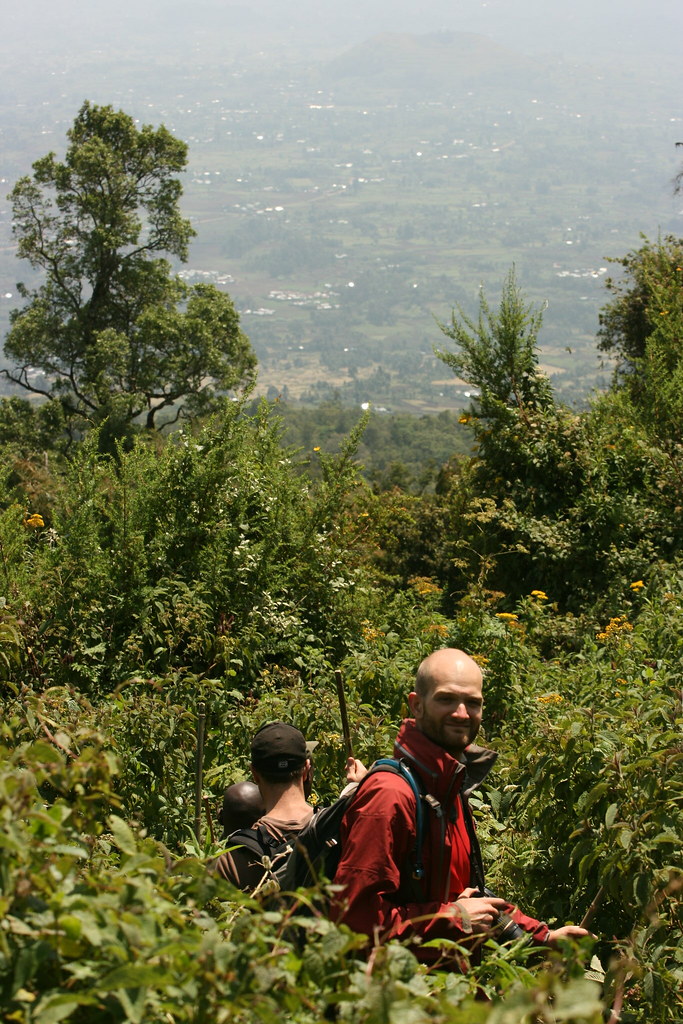
If I were a gorilla that was visited by tourists everyday, I would occassionally want a day off. The gorillas seemed to be thinking the same thing, so they sent one of their number in one direction up the volcano while the rest of the group scarpered in the other. Our guides mistakenly followed the lone gorilla's track leading us on a six hour hike up Mount Gahinga.

By early afternoon, with only piles of gorilla dung and shoots of half eaten bamboo as encouragement, we were all starting to get a bit tired. But then, Matt turned around and passed on a message from the guide - 'they're up ahead' he said, 'we can smell them'. The thick ozzy accent could only be reminiscent of the late great Steve Irwin - a fitting character to be with us at such a time.

And sure enough, up ahead I caught my first glimpse of a black ball of fur rolling playfully down the hill. The guides were muttering their greeting call - a low nnnnnnnnn sound, which the gorillas interpreted as hello. Their response was a much deeper and slighty bored nnnnnnnnmm sound, as if to say 'not you again'.

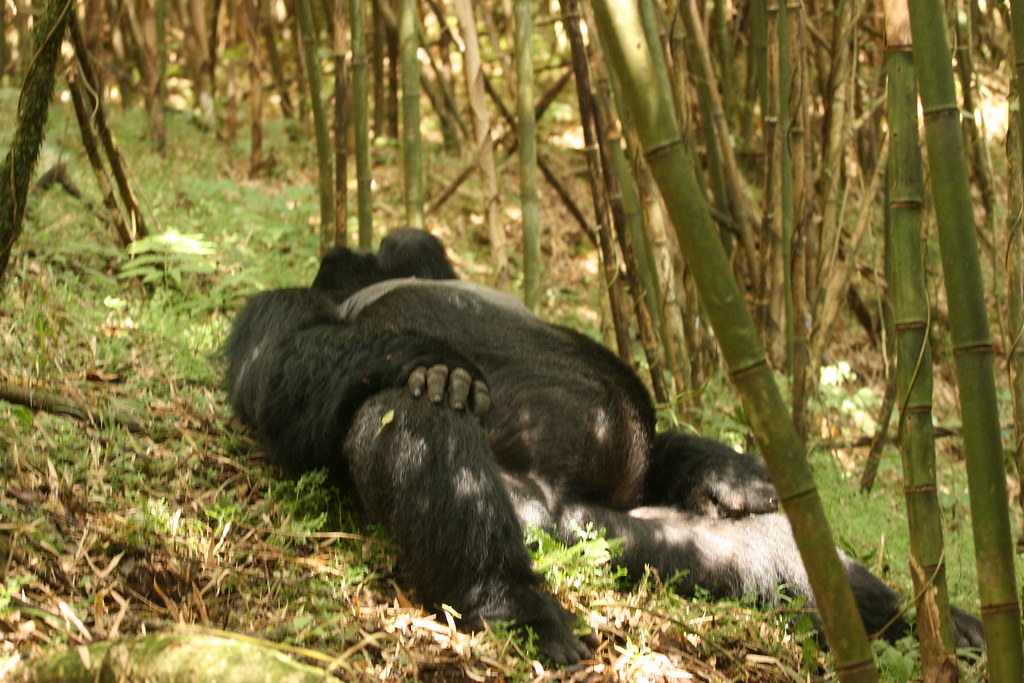
There were eight gorillas in all. A couple of silverbacks, a few females and a baby. The mother with her baby only gave us a quick glance before heading off in to the thick brush, but the head Silverback - Big Mac - was more than happy to put on a show. Initially he was completely unbothered by our prescence, lying sleepily on his back, sunning his giant belly.


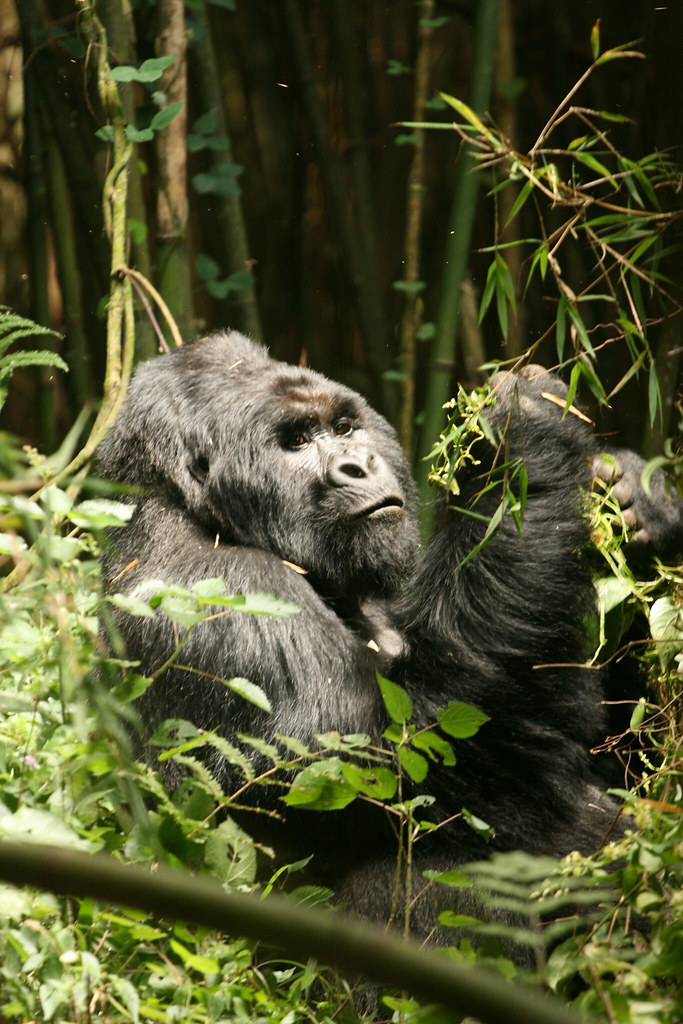
After a short while he got up. Obviously hungry, he wandered over to a shoot of bamboo and proceeded to pull down half the forest. Then he munched happily away, stripping vines with his teeth, occassionally giving us a glance to say, 'well, what are you looking at?'.


But Big Mac warmed to us and before long he was happily sitting just a few feet away. In fact, I think he liked the attention. All four of us were snapping pictures left, right and centre. Ever the showman, Big Mac got up from his spot about 8 metres away and wandered over to sit right in front of us. You're not supposed to get closer than 7 metres to the gorillas, but here was the biggest one of them all sitting just six feet away. Those intelligent orange eyes gleaming at us.


The hour we were allowed to spend with the beautiful beasts seemed to fly by in seconds. The experience was completely different from the safari in the Masai Mara. Much more engaging. The animals not only knew we were there, but they accepted us, and even looked upon us with interest. To answer my question from the previous blog - seeing the gorillas in the flesh was completely different from any image you see on TV. It's the proximity of the encounter. The connection you feel with the animals. Such a priveledge - I'd recommend it to anyone.

Tuesday, August 19, 2008

African Wildlife I - The Masai Mara

When you think of a trip across Africa, one of the first things that springs to mind is the animals. National Geographic, the Discovery Channel and the BBC have spoiled us with stunning images of some of the planet's most captivating creatures. But the question is - are those same beasts even better when you see them in the flesh?

Over the past couple of weeks I've had ample chance to answer that question. Since leaving Nairobi we've been on something of a wildlife tour, visiting four national parks and seeing too many animals for me to recount. Our first stop was the infamous Masai Mara National Park in southern Kenya.

Predictably we left Nairobi late and were still fifty miles away from the park by the time the sun set. Dusk coincided with the end of the tarmac, and so it was on a dark, dusty track that we rode through the Rift Valley to the gates of the Masai Mara. What a spectacular ride. Standing up on the pegs, kicking up huge clouds of dust behind us, watching our headlights reflect in the retinas of fleeing animals. Unforgettable.

It was well and truly dark by the time we got to the outskirts of the park and finding a campsite proved tricky. After riding around for half an hour we stumbled across one fenced off enclosure which looked promising. Three red cloaked owners soon appeared from the shadows to tell us that their campsite wasn't yet finished but we could still stay there if we wanted. Hungry, thirsty and keen to find some working facilities we decided to push on. But as we left, the owners warned us of the dangers of riding at night - 'there are elephants around' one of them said in a hushed whisper, so as not to be overheard. Elephants do have big ears after all.

We didn't encounter any elephants that night, but judging by the huge piles of dung in the middle of the path, they weren't far away. The following day proved more fruitful though.


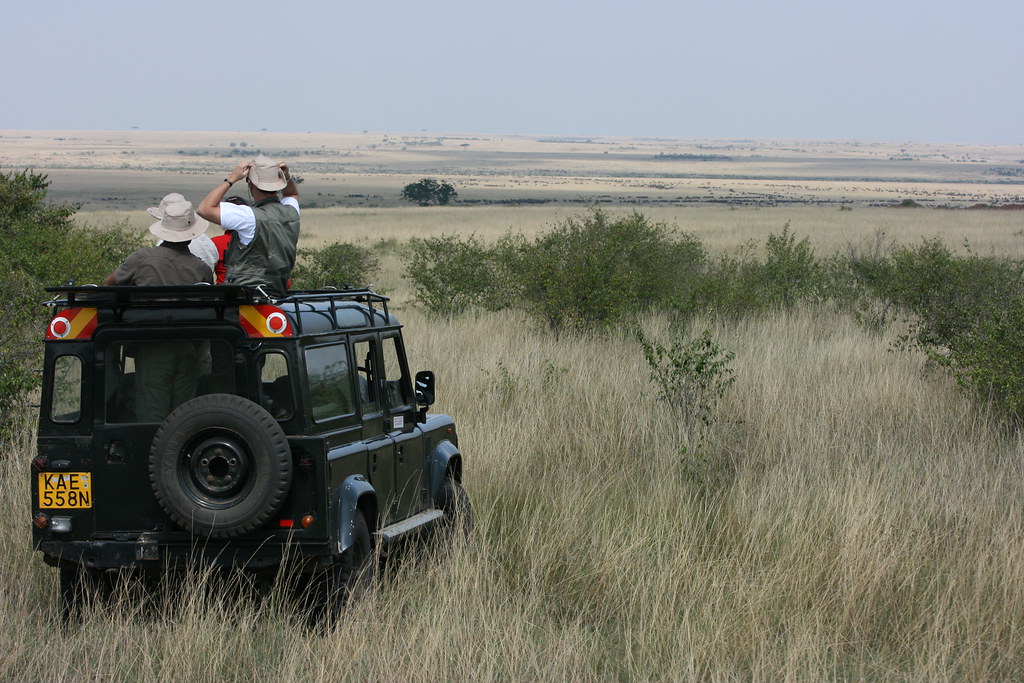
Up with the dawn, we piled in to our rented land cruiser and made our way to the park (you're not allowed to ride motorbikes in the park - something about it being too dangerous). Our visit was well timed, coinciding with the wildebeast migration. In such a time of plenty the wildlife was abundant. We saw dozens of different animals in just a few short hours. I wont list them all, I cant remember most of them, so I'll just write about my favourites instead - the elephants, the lions and the cheetah.

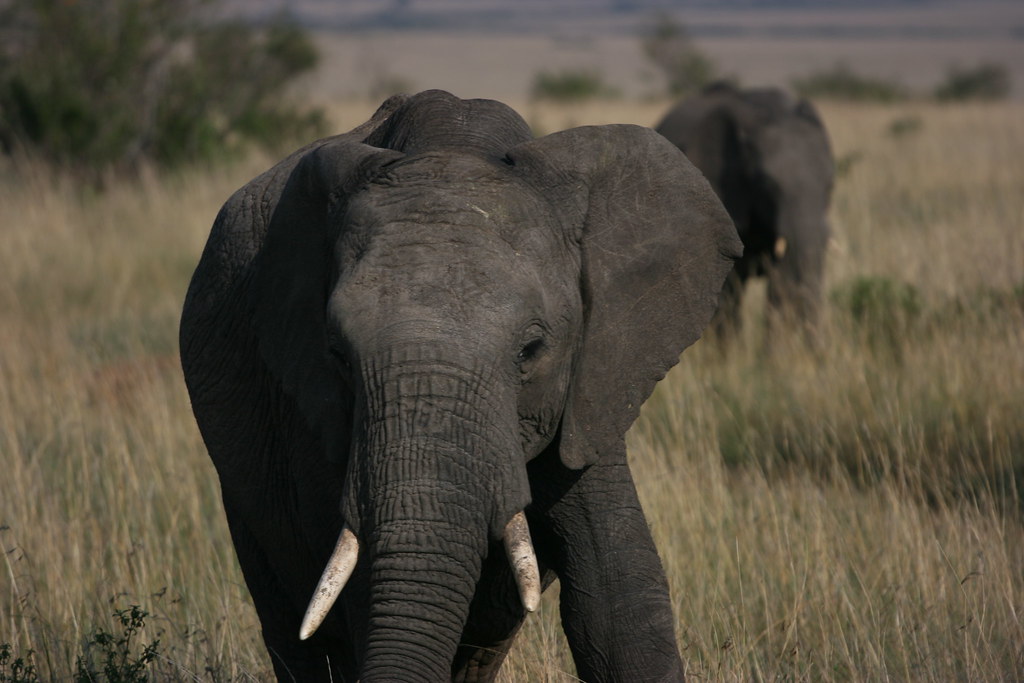
We saw the elephants first or rather our guides did. I took rather longer to distinguish the elephants from the elephant shaped bushes that dotted the savannah. But by the time we were twenty feet away the distinction was obvious even to me. Such gentle giants roaming the savannah, guarding their young and eating pound after pound of grass. They looked curiously at us while munching away. Their wrinkled skin giving them a hundred different expressions. Captivating.


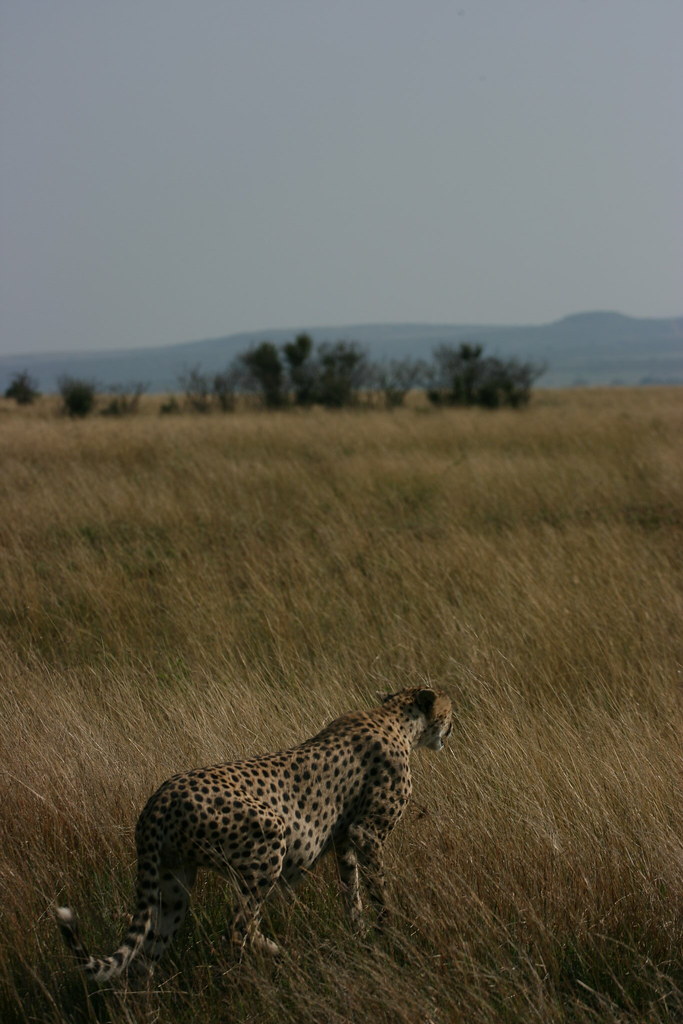
Next was the cheetah. He was on his own, slowly meandering his way after some zebra. He looked full and in no hurry to catch them up. Instead he just sat among the golden grass, in a house-cat pose, surveying the meals in front of him. A proud animal.


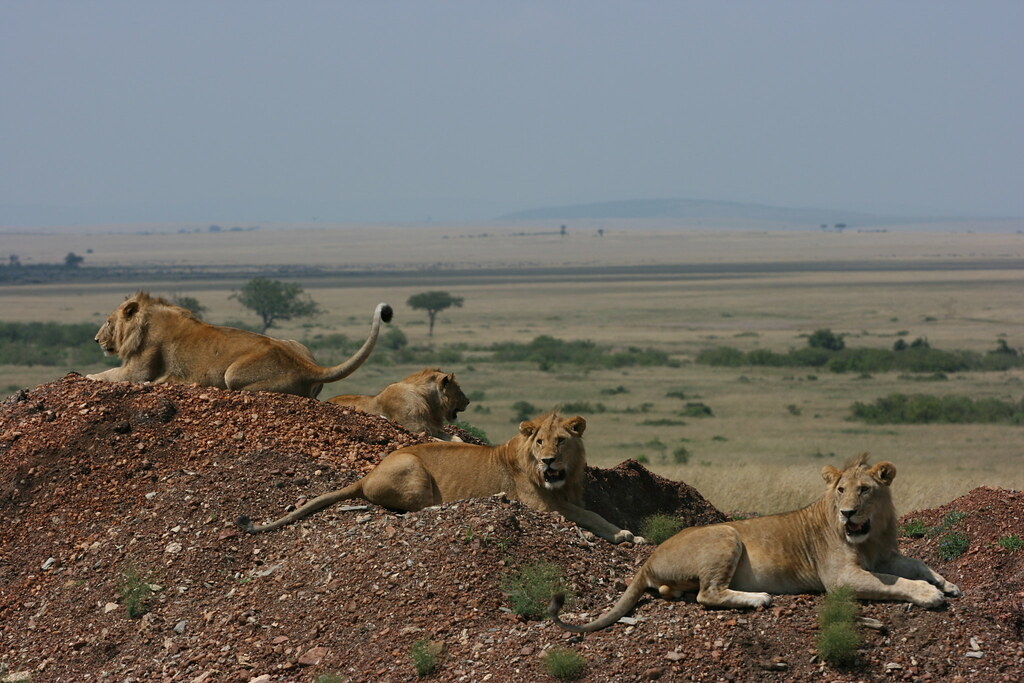
Then came the lions. We found a pack of them near a recent kill, sleeping in the shade. Theirs was the easiest life of all. Sleeping for most of the day, occasionally wandering over to a watering hole for a drink, then back to the bushes for another cat nap.


Like most of the animals, the lions were unfazed by our presence. Many of them barely gave us a second glance. Perhaps because of that - the lack of interaction - the experience didn't feel all that different from going to the zoo. There was still a cage after all (the land cruiser) only this time we were in it. My doctor friends will disagree with me of course. Biologists for the last two decades they were thrilled by the whole experience and will fall over themselves to tell you about it. As for me, I certainly enjoyed the safari. Seeing the animals in the flesh did add something - the smell of rotting carcasses, the sound of trumpeting elephants and growling lions. But the sights I had seen before, better even, thanks to the film crews that come every year to capture them.

I’m glad I went on safari, it gives you a renewed respect for the stunning images that the film crews capture. Although I don’t have the patience to be a wildlife photographer myself, I’ll always enjoy watching the work of those who do.

Monday, August 4, 2008

Ethiopia/Kenya - Food, Dubious Food

Sampling the local cuisine is an integral part of travelling. It's also a necessity when travelling by bike as it's hard to carry enough supplies for a single day let alone three months. But with the local 'delicacies' come side effects. We've all had GI issues on this trip (that's Gastro-Intestinal issues to anyone who hasn't spent the last couple of months with doctors, or tummy trouble to everyone else). Since leaving Turkey our bowels have developed a bipolar disorder flipping between a dammed state and one of uncontrollable flooding. Anyone who has ever accidentally taken four immodium will know that the dammed state is uncomfortable, but manageable. It's when the dam bursts that you run in to trouble. In that situation it's not uncommon for one of us to yell 'campo' at the others - our code word for telling the other two to carry on ahead while business is taken care of in the nearest bush.

Of the three of us, I've probably got the weakest stomach. No doubt caused by my unadventurous diet back home. I'm a typical Englishman and I like my food bland. Those who know me well know that it's quite normal for me to have the same meal day-in day-out for a week or more. But tuna sandwiches, cornflakes and my mum's roast dinner are thin on the ground out here, so I've had to make do. Thankfully the dambusting days have been relatively few and have usually come when we're held up in hotels. But that's not always been the case. Sometimes they occur at the worst possible time.

On the ride out of Addis Ababa, I was feeling a bit peaky. That condition wasn't helped by the choking traffic. In Ethiopia, petrol is scarce so diesel is the fuel of choice. Not normal diesel though. Ethiopian diesel is laced with a special mixture of toxins which cause even the newest cars to spew out thick black smoke. Sitting behind slow moving trucks is particularly noxious and encourages you to overtake. But overtaking in Ethiopia can be very dangerous - as Tyson found out.

Tyson was pulling past a particularly slow moving diesel tanker on the outskirts of Addis when a dog rushed out. With his view obscured by the tanker, Tyson only saw the dog at the last minute. He had no time to react and hit it head on. The impact sent Rosa's front wheel high up in the air and the dog twisting awkwardly underneath. Rosa came down hard on her right hand side, pinning Tyson's leg against the ground. Looking back towards us with his face grimaced in pain, Tyson and his bike ground to a halt just a few feet from some railway tracks. By the time I'd pulled over and got to Tyson, the dog was gone. Presumably crawled off to die in a ditch.

Seeing Tyson sitting up and Rosa on her side with the engine still roaring, I rushed over, hit the kill switch and dragged the bike to the side of the road. Jerry was checking Tyson over. He was standing, clutching his arm and hip. He had some nasty road rash but he'd live. That was all the information I needed. With precious seconds before the dambusters rolled in, I dashed off into the scrubland, yelling 'campo' over my shoulder.


With business taken care of, I returned to find Tyson in a distant state. This wasn't our first crash in Ethiopia. Far from it. I'd come off my bike barely half an hour earlier by crashing in to a sewage pipe laying in the middle of the road. But this one was different. This one was unavoidable. You could argue that we shouldn't have been overtaking. But on any other road in any other country that manoeuvre would have been completely standard. It's only in Ethiopia that such standard moves result in accidents.

Of all the countries I've ridden my bike through, Ethiopia has the most dangerous roads by far. And that's not because the road quality is particularly poor either. For the most part, the roads are actually quite good - smooth tarmac, recently paved and paid for by the Japanese finance ministry. (That explains the prevalence of Japanese cars anyway - in Ethiopia the car in front is always a Toyota). The real danger comes from the traffic, be it: human, donkey, goat, dog, horse, cow, cart, truck, or badly ridden bicycle. Regardless of who or what is on the road, none are traffic savvy and all can jump out in front of you.

We were only in Ethiopia for ten days, yet in that brief time I saw a child and a dog run over. And that was just the accidents I witnessed firsthand. There were signs of countless other incidents on the road. Donkeys, dogs, cows, even horses lying dead with their legs in the air struck stiff by rigor mortis. The animal traffic is heavy in Ethiopia but it's not unique. You encounter similar conditions in other countries - Mexico, Romania, Syria to name a few. What makes the roads particularly hazardous is the people. I cant tell you the number of times I had to slam on my brakes to avoid someone who didn't look before crossing the road. Looking both ways seems so natural to us. The highway code is drilled in to us when we're children. But that education - like so many things in Ethiopia - is lacking. I shudder to think of the number of traffic fatalities in the country every year.

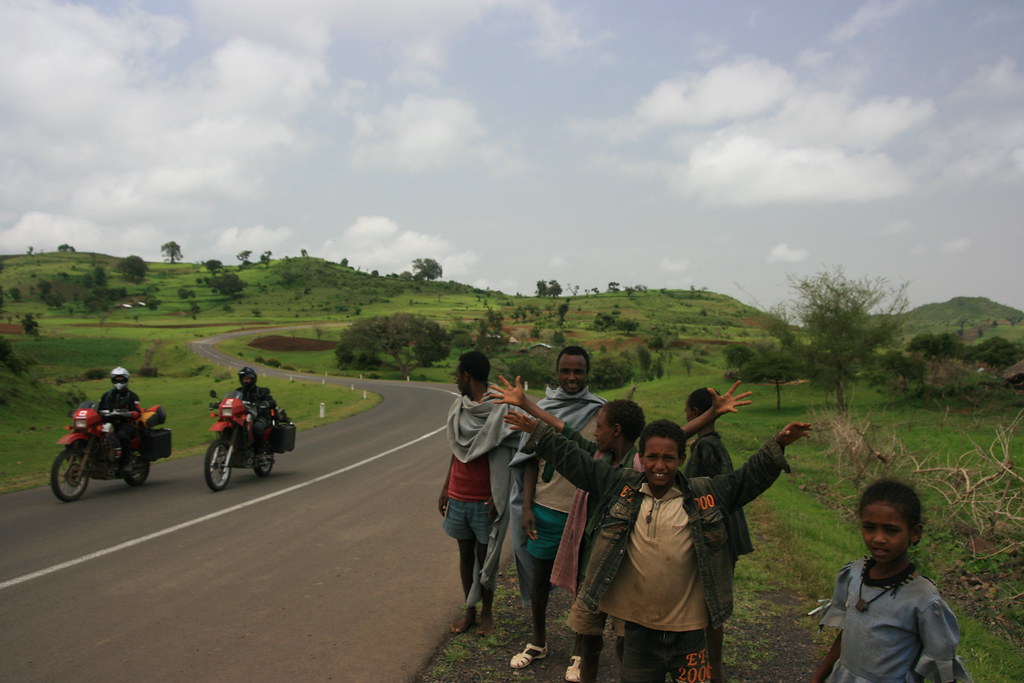
With resources spread so thinly there is precious little for people to do. The kids are particularly bored. Many of them amuse themselves by waving at passers by. Those are the sweethearts. Others - the beggars - rush to the side of the road to yell 'money, money, money, money, money' in the vain hope that people will slam on their brakes and heap riches on them. Then there are the buggers. They entertain themselves by pelting passers-by with rocks. We managed to avoid being stoned in Ethiopia by waving at all the kids. A simple wave was enough to confuse the rock throwers just long enough for us to escape. But other travellers weren't so lucky. One German cyclist - Adrian - was heavily pelted as he rode his bicycle up the steep mountain roads. Rather than get angry he got even. His response was to calmly pick up a goat and cycle with it for 10km. A goat is worth a lot of money in Ethiopia. So after 10km of running after a bicycle you can bet that kid wont be throwing stones any time soon. You might think such a response is uncalled for. After all the kids don't know any better so why punish them? Maybe so. But you've clearly never had a rock thrown at you for no reason. Never experienced the blood curdling rage that overcomes you. Adrian's response was witty and measured. I cant say I would have been so level headed.

With one eye always on the road and the other watching the erratic children, we had precious little time to take in the scenery. When we did steal a glance, we saw the true beauty of Ethiopia. The undulating mountains covered in lush vegetation. Peaks shrouded in cloud. It reminded me of the Scottish highlands.


Could this rich fertile land really be the same country that experiences mass famine? So much potential for agriculture yet no sign of industry. Only subsistence farming. Maybe it was because we visited during the wet season when the country was at its most verdant. But maybe not. When we asked the locals for an explanation of the backward state of the country, they pinned the blame on two things - 'bad government' and 'lazy people'. No-one mentioned the weather.

I cant say whether the people are lazy or not. The back breaking hours spent farming the fields and herding animals certainly didn't strike of laziness. But I cant say I was particularly endeared by the Ethiopian people either. There were exceptions of course. Friendly people, like David who welcomed us in at the Ethiopian border in Metema. He gave us an excellent meal and handed us our first beers since Egypt. But more often than not the locals were an irritation. Interfering with our bikes when we tried to repair them, or trying to scam us whenever we bought something. It got quite tiresome after a while, so by the time we reached the border we were all looking forward to a new country.

Kenya has been the change we were looking for. The locals are still curious about our journey, and some still try to charge us farangi (foreign) prices. But it's a different world. The British colonial influence is strong. Cars drive on the left, tea is universally available, football dominates conversation and the logos of Man United and Arsenal are emblazened everywhere - even on the walls of corrugated shacks in remote tribal villages. British road signs, road names, land rovers, pubs, electrical sockets, supermarkets, post offices, Cadbury's chocolate, cornflakes and Ribena. Kenya is like a home from home right in the wild heart of Africa.

This spectacular country has some of the most thrilling roads I've ridden. Not because they're beautifully paved. Quite the opposite in fact. The stretch from Moyale (at the Ethiopian border) to Isiolo is 350 miles of rocky, sandy, dusty terrain that tests your metal and your bike. On this road the Long Way Down boys busted two shock absorbers. Our shocks remained intact, but by the time we rattled and bounced our way to Nairobi, Tyson's bike would only start if we pushed it, my fork oil had leaked, all our bikes had electrical problems and we were in desperate need of a welder. But bush camping in the middle of the rocky desert, amongst the scorpions, spiders and stars was truly blissful. The taste of adventure we all love. The trip we'd all hoped for.


Now in Nairobi, the milestones are passing by fast. We're over two months in to our trip, we've crossed the equator, and we've covered 15,000 kilometres. Also, thanks to the availability of western food, some semblance of normaly has returned to our bowels. Thank you Kenya.